

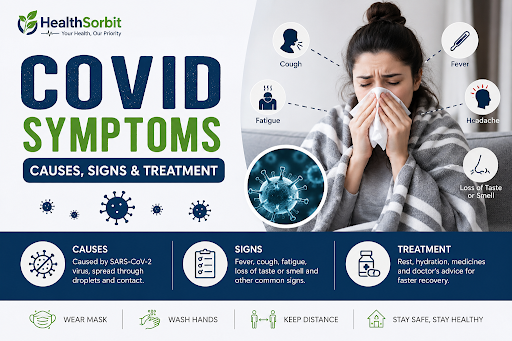
Covid symptoms, causes, signs & treatment remain important topics even years after the pandemic began, because the virus still circulates in most countries. I have personally gone through a Covid infection, and I have also helped family members recover from it at home. In this guide, I combine real experience with reliable medical guidance so you know exactly what to expect and how to respond.
Whether you are dealing with a mild cold-like illness or you want to understand the warning signs of a serious infection, this article walks you through everything in simple language. You will find a clear breakdown of causes, a full list of symptoms, early signs to watch for, and practical treatment steps that actually work.
What Is Covid?
Covid, short for Coronavirus disease, is a respiratory illness caused by the SARS-CoV-2 virus. It spreads mainly through droplets released when an infected person coughs, sneezes or talks. The virus primarily affects the lungs and airways, but it can also impact other organs in severe cases.
Since the first outbreak, the virus has changed through several variants. Each variant brings slightly different symptoms, but the core illness pattern has stayed fairly consistent. Understanding Covid symptoms helps you catch the infection early and prevent it from spreading to others.
Common Covid Symptoms
Covid symptoms usually appear within two to fourteen days after exposure. Within a day, fatigue and body aches set in.
Here is a table listing the most common Covid symptoms, arranged by how often they typically occur:
| Symptom | Frequency | Typical Onset |
| Fever or chills | Very common | Day 1–3 |
| Dry cough | Very common | Day 1–3 |
| Fatigue | Very common | Day 1–2 |
| Loss of taste or smell | Common | Day 2–5 |
| Sore throat | Common | Day 1–2 |
| Body aches | Common | Day 1–3 |
| Headache | Common | Day 1–3 |
| Shortness of breath | Less common, serious | Day 5–10 |
| Diarrhoea or nausea | Occasional | Any stage |
| Skin rash | Rare | Any stage |
Not everyone experiences every symptom. Some people remain asymptomatic, meaning they carry the virus without showing any visible signs at all, yet they can still pass it to others.
Early Warning Signs of Covid
Recognising early signs of Covid can make a real difference in how quickly you recover. Based on personal experience and medical reports, these early indicators often appear before a full-blown fever:
- Sudden tiredness that feels heavier than normal
- A tickle in the throat that turns into a dry cough
- Reduced ability to smell your food or perfume
- Mild chills without an obvious cause
- Loss of appetite
If you notice two or more of these early signs together, it is wise to isolate yourself and get tested promptly. Early detection reduces the chances of spreading the virus within your household or workplace.
Causes of Covid Infection
The primary cause of Covid is exposure to the SARS-CoV-2 virus. However, several factors increase the risk of catching the infection or developing a severe case. Understanding these causes helps you take smarter precautions.
Main causes and risk factors include:
- Airborne transmission: Breathing in respiratory droplets from an infected person.
- Close contact: Standing near someone who is coughing or talking without a mask.
- Touching contaminated surfaces: Then touching your face, eyes or mouth.
- Crowded indoor spaces: Poor ventilation allows the virus to linger longer in the air.
- Weakened immunity: People with diabetes, heart disease or low immunity face higher risk.
- Age factor: Older adults tend to develop more severe symptoms.
I noticed that most infections in my circle happened after indoor gatherings with poor airflow, which matches what health experts have repeatedly emphasised. Good ventilation genuinely lowers your chances of catching the virus.
Covid Signs That Indicate Severity
Mild Covid signs can usually be managed at home, but certain signs point toward a more serious condition that needs urgent medical care. Watch out for:
- Persistent chest pain or pressure
- Difficulty breathing even while resting
- Bluish tint on lips or face
- Sudden confusion or trouble staying awake
- Oxygen saturation dropping below 94 percent on a pulse oximeter
If you or a family member shows any of these signs, contact a doctor immediately or head to the nearest hospital. These symptoms should never be ignored.
Covid Treatment Options
There is no single cure for Covid, but a combination of rest, supportive care and medical guidance helps most people recover fully. Treatment usually depends on how severe the symptoms are.
For mild cases, doctors generally recommend:
- Plenty of rest and sleep
- Staying hydrated with water, soups and electrolyte drinks
- Paracetamol for fever and body pain
- Steam inhalation to ease congestion
- Isolating from other household members for at least five to seven days
For moderate to severe cases, treatment may include:
- Prescription antiviral medication, only under a doctor’s supervision
- Oxygen therapy if breathing becomes difficult
- Hospital monitoring for oxygen levels and lung function
- Corticosteroids in specific situations, decided by a physician
From my own recovery, I found that pacing myself mattered more than pushing through. Resting properly for the first week sped up my recovery, while trying to work through the fatigue only extended my symptoms.
Home Remedies That Actually Help
Alongside medical treatment, a few home remedies genuinely eased my symptoms:
- Warm turmeric milk before bed to soothe the throat
- Ginger and honey tea to reduce coughing
- Gargling with warm salt water twice a day
- Light stretching once fever subsides, to prevent stiffness
- Keeping the room well ventilated with fresh air
These remedies do not replace medical treatment, but they support the body’s natural healing process alongside proper care.
When to See a Doctor
You should consult a doctor if fever persists beyond three days, if breathing feels laboured, or if symptoms suddenly worsen after initially improving. People with underlying health conditions such as asthma, diabetes or heart disease should reach out to a healthcare provider as soon as symptoms begin, rather than waiting to see how things progress.
Prevention Tips
Preventing Covid infection is always easier than treating it. A few consistent habits lower your risk significantly:
- Wash hands frequently with soap for at least twenty seconds
- Wear a mask in crowded or poorly ventilated spaces
- Keep your vaccination and booster doses up to date
- Maintain distance from anyone showing cold or flu symptoms
- Improve indoor ventilation wherever possible
Final Thoughts
Understanding Covid symptoms, causes, signs & treatment empowers you to act quickly and confidently, whether you are protecting your family or managing your own recovery. Most cases remain mild and resolve with proper rest and care, but knowing the warning signs of severity can genuinely save a life. Stay informed, stay cautious, and do not hesitate to seek medical help when your body signals that something is wrong
FAQS
1. How long do Covid symptoms usually last?
Mild Covid symptoms typically last seven to ten days, while fatigue may linger for a couple of weeks longer.
2. Can Covid symptoms appear without fever?
Yes, many people experience Covid symptoms like cough, fatigue or loss of smell without ever developing a fever.
3. Is loss of taste and smell always a sign of Covid?
Not always, but it is a strong indicator when combined with other Covid symptoms and signs.
4. What is the best home treatment for mild Covid?
Rest, hydration, steam inhalation and fever-reducing medicine form the core of effective home treatment.
5. When should I go to the hospital for Covid?
Go immediately if you experience breathlessness, chest pain, bluish lips or confusion, as these are serious signs.