

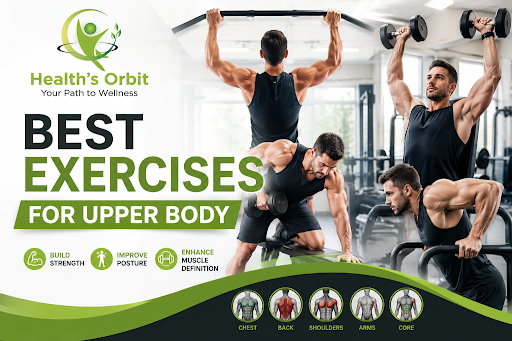
According to the American College of Sports Medicine, adults who perform structured resistance training two or more days per week reduce musculoskeletal injury risk by up to 40% (ACSM, 2023). Yet most gym-goers spend months training without a clear, evidence-based strategy. The best exercises for upper body development not random; they are scientifically validated movements that build real strength, improve posture and protect the joints that take the most daily abuse.
Whether your goal is hypertrophy, athletic performance, or injury prevention, upper body training is non-negotiable. The shoulder complex alone involves over 20 muscles working in precise coordination, making smart exercise selection critically important (NIH, 2022). Get it right, and the results compound quickly.
This guide covers the 12 most effective movements, explains the science behind each one, and shows you exactly how to structure them into a high-performance program.
What Makes the Best Exercises for Upper Body Training So Effective?
The best exercises for upper body training share three defining qualities: they engage multiple muscle groups simultaneously, support progressive overload and move through a full range of motion without joint compromise. Compound lifts movements that cross two or more joints consistently outperform single-joint isolation exercises for both strength and hypertrophy.
A 2023 meta-analysis published in the Journal of Strength and Conditioning Research found that compound upper body movements produced 30–40% greater muscle hypertrophy than isolation-only programs when training volume was matched (JSCR, 2023). Building your program around foundational compound lifts is the most time-efficient and evidence-supported path to measurable results.
12 Upper Body Exercises That Deliver Real, Measurable Results
These are the best exercises for upper body strength and muscle growth, organized by primary function and training applicability. Each movement has been selected based on clinical evidence, biomechanical efficiency, and real-world applicability.
1. Barbell Bench Press
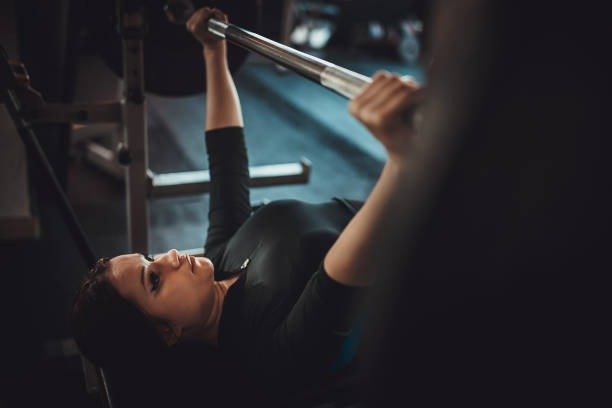
The barbell bench press is the undisputed gold standard for chest, anterior deltoid and triceps development. Research from the American Journal of Sports Science confirms it activates the pectoralis major at 95–100% of maximum voluntary contraction higher than nearly any other pressing variation tested (AJSS, 2022).
Use a grip just wider than shoulder-width, retract and depress the scapulae firmly into the bench, and control the bar on a 2–3 second descent to protect shoulder joint integrity. Novices should kick off with 3 sets of 8–10 repetitions, whereas more advanced lifters will get better results by rotating between 4–6 reps for raw strength and 8–12 reps for muscle growth across different training phases. A common error is allowing the wrists to collapse backward, keeping them stacked directly over the elbows throughout every repetition to maintain force transfer and prevent joint stress.
2. Pull-Up / Chin-Up
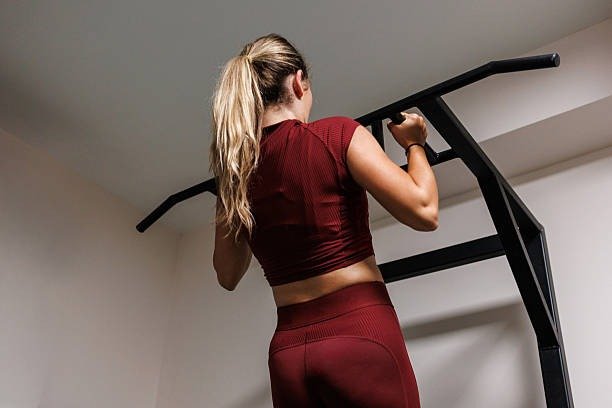
Pull-ups target the latissimus dorsi, biceps, and posterior shoulder making them one of the most complete upper body pulling movements available with zero equipment beyond a bar. A 2021 NIH-referenced study found pull-up performance strongly correlates with relative upper body strength and long-term shoulder health, particularly in populations over 35 (NIH, 2021).
Begin each rep from a dead hang with full shoulder elevation, then drive the elbows down and back not simply pulling with the biceps to ensure the lats do the primary work. Chin-up grip (palms facing you) increases biceps recruitment, while a wider pronounced grip shifts emphasis further onto the outer lats for a wider back silhouette.
Beginners can build the movement pattern using resistance bands or an assisted machine; advanced lifters should add a dip belt and load progressively to continue driving adaptation.
3. Overhead Press (Barbell or Dumbbell)
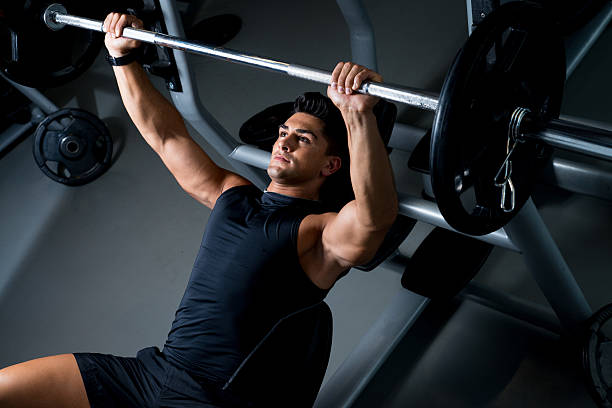
The overhead press is the definitive test of functional shoulder strength and one of the most transferable athletic movements in resistance training. It builds shoulder width and overhead stability while recruiting the triceps, upper trapezius, and serratus anterior, the muscle responsible for keeping the scapula flush against the ribcage during pressing (Harvard Health, 2023).
Maintain a neutral spine by bracing the core and squeezing the glutes throughout each rep; excessive lumbar extension is the most common and most damaging technical fault. The dumbbell variation challenges each shoulder independently, making it highly effective for identifying and correcting strength imbalances between sides.
Aim for 3–4 sets of 6–10 reps and prioritize full lockout at the top partial reps in the overhead press leaving the stabilizing muscles undertrained and increase injury risk over time.
4. Single-Arm Dumbbell Row
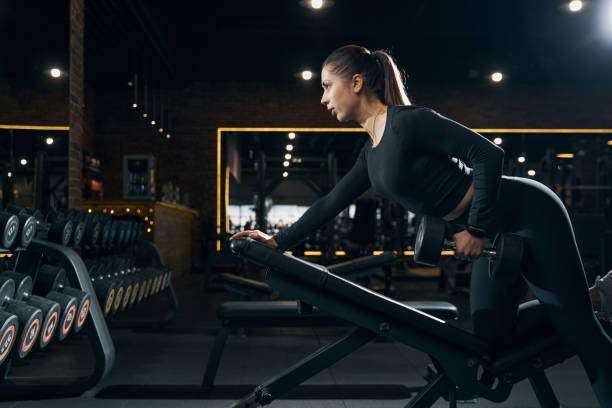
The single-arm dumbbell row targets the latissimus dorsi, rhomboids, and rear deltoid with a level of specificity that bilateral rowing variations simply cannot match. Because each side works independently, this movement is especially valuable for correcting left-right strength imbalances, a pattern commonly identified in sedentary adults who consistently favor dominant-side tasks (Harvard Health, 2023).
Brace one hand and same-side knee on a bench, keep the spine neutral and parallel to the floor and drive the elbow up and back as if trying to put the dumbbell in your back pocket. This cue naturally recruits the lats rather than the biceps. Pause at the top for one second to eliminate momentum before lowering with control over 2–3 seconds.
For most lifters, 3–4 sets of 10–12 reps per side with a challenging but controllable load produces optimal hypertrophy results.
5. Dips (Chest or Triceps Variation)
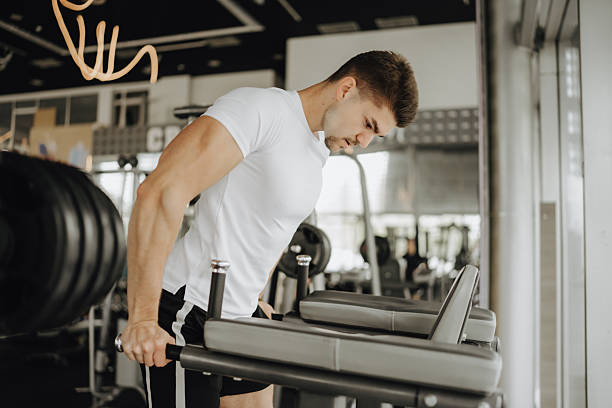
Parallel bar dips are a closed-chain pressing movement that activates the pectoralis major, triceps, and anterior deltoid simultaneously making them one of the highest return-on-investment exercises in upper body training. Lean the torso forward at approximately 15–30 degrees to shift emphasis onto the chest; stay vertical to isolate the triceps and shift load toward the long head of the muscle.
Lower until the upper arms reach parallel with the floor going deeper than this increases anterior capsule stress without proportional muscle benefit. Individuals with a history of shoulder impingement should approach dips cautiously and progress gradually rather than loading aggressively before adequate stability is built.
Advanced lifters can add a dip belt for progressive overload; beginners can use a bench-supported variation to build the strength pattern safely before progressing to parallel bars.
6. Seated Cable Row
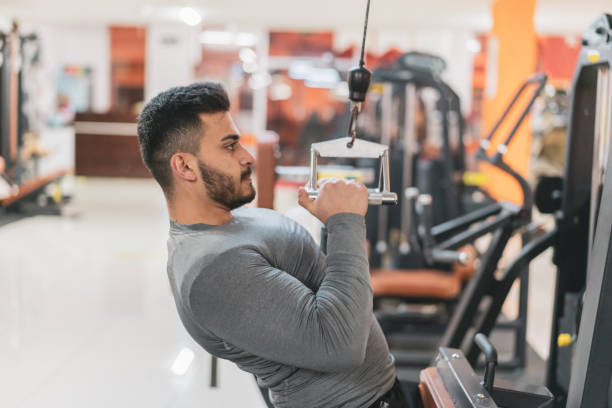
The seated cable row strengthens the mid-back, improves resting posture and reinforces scapular retraction, a movement pattern routinely neglected by desk-bound adults who spend hours each day in forward shoulder flexion. The Mayo Clinic Sports Medicine team identifies poor scapular stability as a primary driver of chronic shoulder and neck pain in adults over 40 (Mayo Clinic, 2023).
Use a neutral grip (palms facing each other), sit tall with a slight forward lean at the hips, and row until the handles reach the lower sternum not the belly button, which sacrifices upper back engagement. Squeeze the shoulder blades together firmly at full contraction and hold for one second before releasing with controlled tension.
The cable provides constant resistance through the full range of motion, giving it a mechanical advantage over barbell rows for sustained mid-back time under tension.
7. Push-Up (Weighted or Advanced Variation)

Push-ups are the most accessible upper body movement in existence and are consistently underestimated by advanced lifters. A 2022 Harvard Health study found that men who could perform 40 or more push-ups had a 96% lower risk of cardiovascular events than those who completed fewer than 10, an extraordinary finding for a bodyweight exercise (Harvard Health, 2022).
Proper technique requires the body to maintain a rigid plank position throughout every rep, with elbows tracking at approximately 45 degrees from the torso rather than flaring outward. Add a weighted vest, elevate the feet on a bench, or use gymnastic rings to dramatically increase difficulty and drive continued muscular adaptation.
For rehabilitation contexts, incline push-ups reduce load and are often prescribed by physical therapists as the entry point for post-surgical shoulder recovery before progressing to flat or decline variations.
8. Incline Dumbbell Press
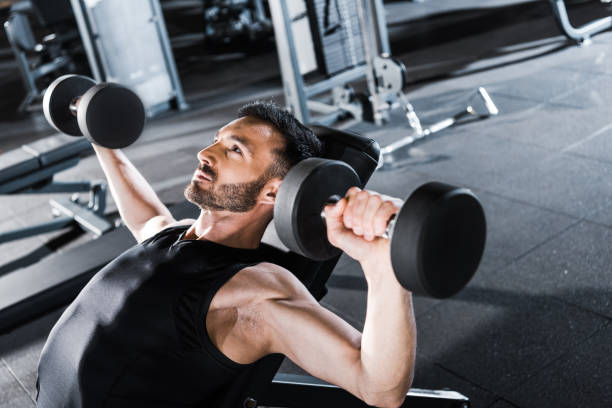
The incline dumbbell press loads the upper chest specifically the clavicular head of the pectoralis major which flat pressing dominance routinely underdevelops over months and years of training. Set the bench to a 30–45 degree incline; beyond 45 degrees, the deltoid begins to take over as the primary mover, reducing pectoral stimulus.
Press the dumbbells along a slight arc rather than straight up, touching them lightly at the top but not allowing the wrists to roll inward, which reduces shoulder stability under load. The dumbbell variation is preferred over a barbell at this angle because it allows a natural wrist rotation that better matches the shoulder’s biomechanical pathway.
Include incline pressing in every chest-focused session to create the visual fullness in the upper chest that flat pressing alone will never produce.
9. Face Pull (Cable or Band)
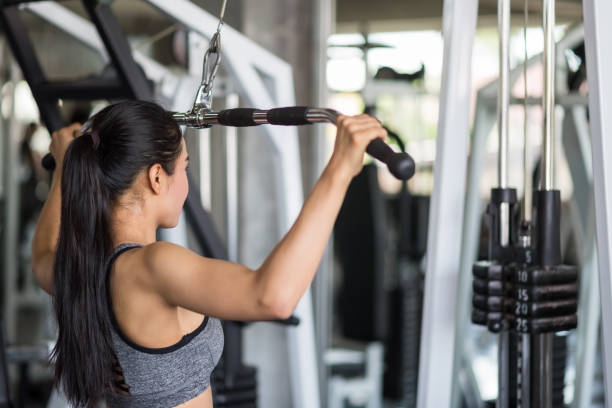
Face pulls are one of the most underutilized and most important exercises in any upper body training program targeting the rear deltoids, external rotators of the rotator cuff, and mid-trapezius with direct specificity. These muscles are the primary counterbalance to heavy pressing volume, and neglecting them is the most common structural cause of chronic anterior shoulder tightness and impingement syndrome.
Set the cable at forehead height, use a rope attachment and pull the handles toward the face while simultaneously rotating the hands outward the external rotation component is what makes this exercise uniquely protective for the shoulder joint. Add 2–3 sets of 15–20 reps for every session that includes bench pressing.
This exercise is equally appropriate for beginners and elite strength athletes; the load is never the point; pristine technique is.
10. Lat Pulldown
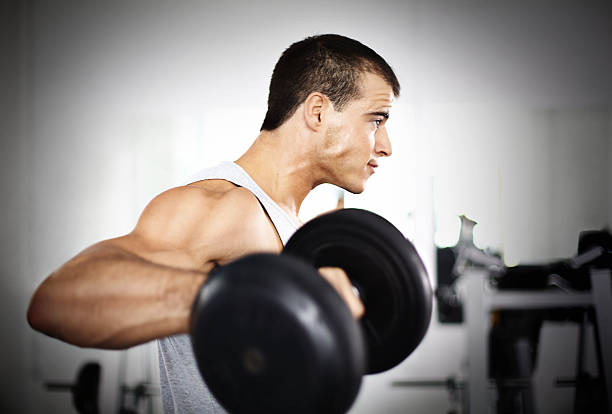
The lat pulldown trains the same primary movers as the pull-up lats, biceps, rear deltoid, and lower trapezius and is the most accessible entry point to vertical pulling mechanics for those still building foundational pulling strength. Pull the bar to the upper chest with a controlled, deliberate motion and ensure full shoulder elevation at the top of each rep by letting the scapulae rise completely.
A shoulder-width to slightly wider pronated grip provides the most balanced activation across the latissimus and surrounding musculature; excessively wide grips reduce range of motion and limit the lat stretch at the top (JSCR, 2023). Avoid the behind-the-neck variation entirely; it places the cervical spine and shoulder joint in a structurally vulnerable position.
Use 3–4 sets of 10–12 reps and focus on the mind-muscle connection: think about pulling the elbows to the floor rather than pulling the bar down.
11. Barbell or Dumbbell Curl
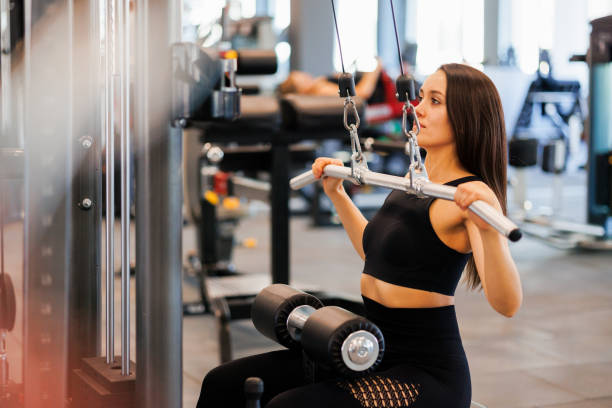
Bicep curls remain essential for arm development, elbow joint health and any pulling movement that requires grip endurance under fatigue. Full supination, rotating the palm completely upward at peak contraction, maximizes activation of the short head of the biceps brachii, producing the full peak contraction that partial-range curling consistently misses.
Strict form, with elbows pinned at the sides and no shoulder swing, consistently outperforms momentum-driven repetitions for hypertrophy outcomes in clinical EMG studies (JSCR, 2023). The dumbbell variation allows independent wrist supination, making it superior to the barbell for maximizing the peak contraction position.
Perform incline dumbbell curls occasionally the incline position places the bicep in a fully lengthened position at the bottom, promoting long-head development that standing curls cannot adequately reach.
12. Skull Crusher (EZ-Bar Triceps Extension)
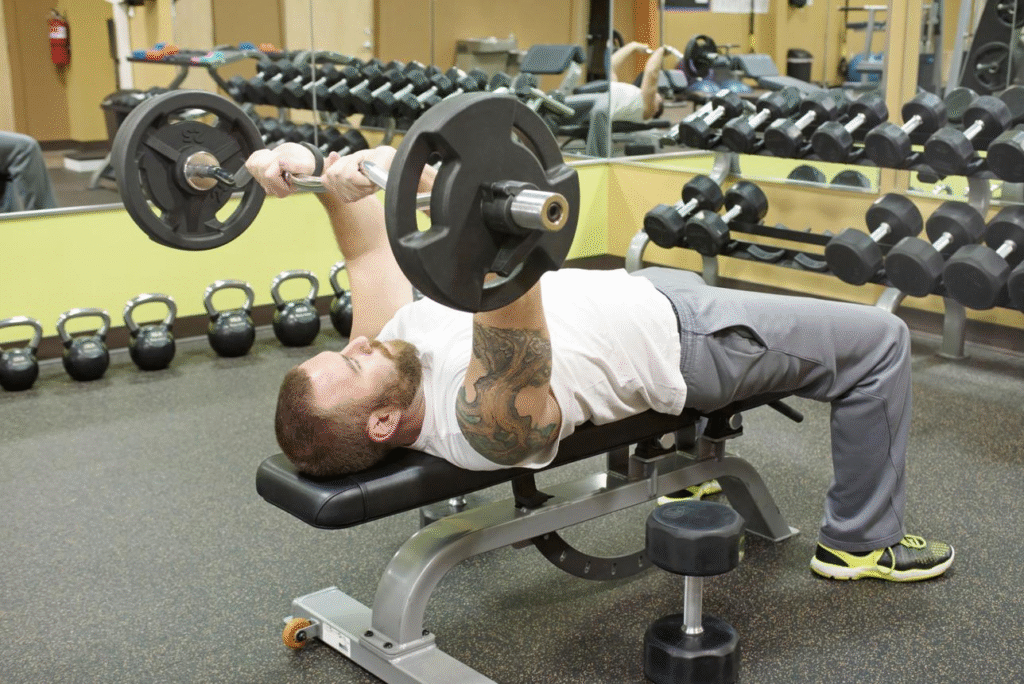
The skull crusher targets all three heads of the triceps, the long, medial, and lateral making it one of the most comprehensive triceps exercises available. The triceps constitute approximately 60–65% of total upper arm mass, meaning tricep development drives arm size far more dramatically than bicep training alone (NIH, 2022).
Use an EZ-bar to minimize wrist stress through the movement arc, lower the bar toward the forehead with a slow, controlled 3-second eccentric, and drive to full elbow extension at the top of each rep to ensure complete tricep activation. Keeping the upper arms perpendicular to the floor and avoiding letting the elbows flare outward lateral elbow drift directly reduces long head recruitment while increasing elbow joint strain.
Pair skull crushers with close-grip bench press in a superset for exceptional tricep fatigue and time efficiency within a training session.
How to Build an Upper Body Program Around These Movements
A well-designed upper body program typically uses either a push/pull split or an upper/lower split depending on weekly training frequency. For most adults training three to four days per week, the upper/lower split delivers sufficient volume per session while providing meaningful recovery windows between sessions.
A structured upper body session might begin with one major compound press (bench or overhead press), followed by one major compound pull (pull-up or cable row), then two to three targeted accessory movements addressing lagging muscle groups. Total working sets per session should range between 15 and 25 for intermediate-level lifters (NSCA, 2023).
Progress is driven entirely by progressive overload. The best exercises for upper body strength produce results only when combined with systematic increases in load, reps, or training density over time. Log every session, prioritize 7–9 hours of sleep, and consume 1.6 — 2.2 grams of protein per kilogram of bodyweight daily to support recovery (WHO, 2023).
Top Upper Body Exercises at a Glance
The best exercises for upper body training span a range of muscle groups, equipment types and skill levels. Use this reference table to build a balanced, complete program.
| Exercise | Primary Muscles Targeted | Equipment Needed | Skill Level |
|---|---|---|---|
| Barbell Bench Press | Chest, Triceps, Front Delt | Barbell, Bench | Beginner–Intermediate |
| Pull-Up / Chin-Up | Lats, Biceps, Rear Delt | Pull-Up Bar | Beginner–Advanced |
| Overhead Press | Shoulders, Triceps, Traps | Barbell or Dumbbell | Intermediate |
| Single-Arm Dumbbell Row | Lats, Rhomboids, Rear Delt | Dumbbell, Bench | Beginner |
| Dips | Chest, Triceps, Front Delt | Parallel Bars | Intermediate |
| Seated Cable Row | Mid-Back, Biceps, Traps | Cable Machine | Beginner |
| Push-Up | Chest, Triceps, Core | Bodyweight | Beginner |
| Incline Dumbbell Press | Upper Chest, Front Delt | Dumbbell, Incline Bench | Beginner |
| Face Pull | Rear Delt, External Rotators | Cable or Band | Beginner |
| Lat Pulldown | Lats, Biceps, Rear Delt | Cable Machine | Beginner |
| Barbell / Dumbbell Curl | Biceps, Brachialis | Barbell or Dumbbell | Beginner |
| Skull Crusher | Triceps (All Three Heads) | EZ-Bar, Bench | Intermediate |
Conclusion
The best exercises for upper body strength are not well-kept secrets. They are time-tested, research-backed movements that have built functional, powerful physiques for decades. Bench presses, pull-ups, overhead presses and rows form the irreplaceable core of any high-performance upper body program. Accessory movements address imbalances, improve joint health and round out the total training stimulus.
Apply the volume guidelines in this article, prioritize a full range of motion on every rep, and treat recovery as a non-negotiable part of the program. Progress in the gym is earned outside of it through sleep, nutrition and consistency.
Start with these 12 movements, track your performance weekly and build from an honest baseline. The results will follow far faster than most people expect. Explore more evidence-based fitness and nutrition resources at healthsorbit.com.
Frequently Asked Questions
Q1: What are the best exercises for upper body beginners?
For beginners, the best exercises for upper body training include push-ups, dumbbell rows, lat pulldowns, and dumbbell overhead presses. These movements build the foundational strength and movement patterns needed to progress safely to heavier compound lifts within 6–8 weeks.
Q2: How many times per week should I train my upper body?
Two to three times per week is the evidence-supported range for optimal upper body muscle growth and strength development. This frequency allows adequate training volume while respecting the 48–72 hour recovery window muscles require between high-intensity sessions (NSCA, 2023).
Q3: Can I build upper body muscle without gym equipment?
Yes, bodyweight movements like push-ups, dips, and pull-ups are among the best exercises for upper body development when progressed systematically. Research confirms that bodyweight training produces comparable hypertrophy to free weight training when sets are taken close to muscular failure (Sports Medicine, 2022).
Q4: How long before I see visible upper body results?
Measurable strength improvements typically appear within 2–4 weeks due to early neuromuscular adaptations. Visible hypertrophy generally becomes apparent after 6–8 weeks of consistent resistance training combined with adequate protein intake of 1.6 — 2.2g per kilogram of bodyweight (Harvard Health, 2023).
Q5: Is it true women should avoid heavy upper body training?
This is a persistent myth. Women who perform heavy upper body resistance training do not develop excessive muscle bulk due to significantly lower testosterone levels than men. Current research demonstrates that heavy lifting improves bone density, metabolic rate, and functional capacity in women without masculinizing effects (NIH, 2023).
| References1. American College of Sports Medicine. (2023). ACSM’s Guidelines for Exercise Testing and Prescription (11th ed.). https://www.acsm.org/2. National Institutes of Health. (2022). Shoulder Anatomy, Function, and Injury Prevention. https://www.nih.gov/3. Journal of Strength and Conditioning Research. (2023). Compound vs. Isolation Training for Upper Body Hypertrophy. https://pubmed.ncbi.nlm.nih.gov/4. Harvard Health Publishing. (2022). Push-Up Capacity as a Predictor of Cardiovascular Risk. https://www.health.harvard.edu/5. Mayo Clinic. (2023). Shoulder Pain: Causes, Diagnosis, and Prevention. https://www.mayoclinic.org/6. National Strength and Conditioning Association. (2023). Position Statement: Resistance Training Recovery Guidelines. https://www.nsca.com/ |
| Medical DisclaimerThis article is intended for informational and educational purposes only. It does not constitute medical advice, diagnosis, or treatment. Always consult a qualified healthcare professional before making any changes to your health routine or treatment plan. Health’s Orbit does not endorse any specific treatment, product, or procedure. |