

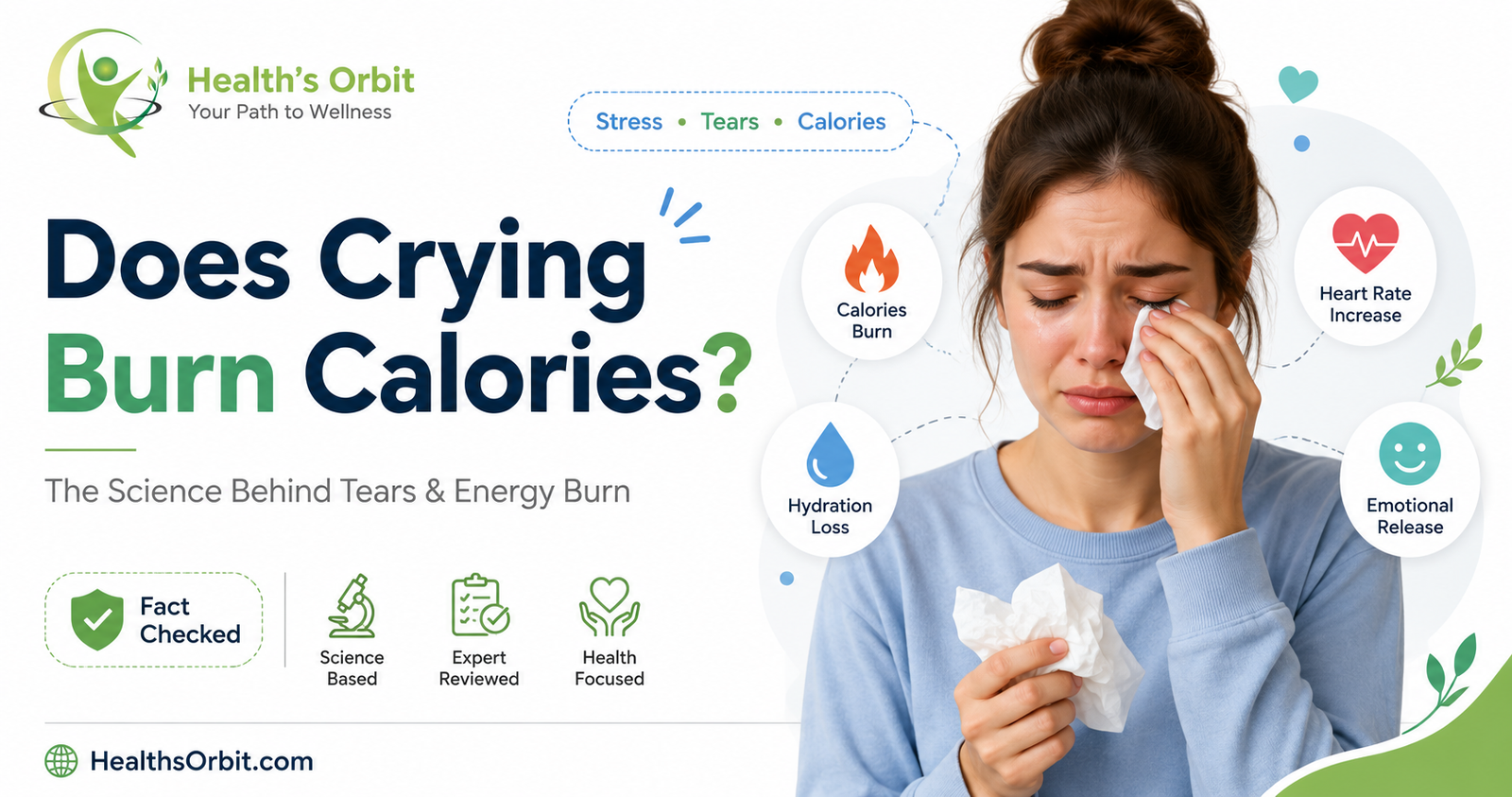
Have you ever finished a long cry and felt somehow lighter not just emotionally, but physically? You are not alone. Many people wonder whether shedding tears actually burns calories. It sounds like a strange question at first. However, science has a surprisingly interesting answer.
So, does crying burn calories? In this article, we will explore the science behind crying, how it affects your body, and whether it can actually play a role in calorie burning.
What Happens to Your Body When You Cry?
Crying is far more than an emotional response. It is a full-body physiological event. When you cry, your nervous system becomes activated. Your heart rate increases, your breathing changes, and your muscles can tense up. All of these processes require energy and energy use means calorie burning.
There are three types of tears the human body produces. Reflex tears occur when something irritates your eyes, like onions or smoke. Emotional tears, however, are the ones most associated with deep feelings such as sadness, grief, or even joy. Emotional crying is the type most likely to engage the body in an energy-consuming process.
Does Crying Burn Calories? What the Science Says
So, does crying burn calories in a medically meaningful way? Research suggests it does to a modest degree. A study often referenced in this discussion found that emotional crying can raise your metabolic rate slightly above your baseline. When you cry, your body produces stress hormones like cortisol and adrenaline. These hormones increase your heart rate and stimulate physical activity within the body, both of which require your system to burn more energy than it would at rest.
On average, a person burns roughly 1.3 calories per minute at rest. During an emotional crying episode, this number may increase modestly. That may not sound like much. However, during a prolonged, intense cry, the total calorie burn can add up slightly.
How Many Calories Does Crying Actually Burn?
Let’s put some numbers to this. A typical crying session lasts anywhere from a few minutes to over an hour. Based on the modest increase in metabolic activity, you might burn an additional 1 to 5 extra calories during a brief cry. During a longer, more intense emotional episode, that figure could rise slightly higher.
It is important to be realistic here. Crying is not a weight-loss strategy. The calorie burn from crying is far less than even a short walk or a few minutes of light stretching. Nevertheless, the fact that your body is doing more work while crying compared to sitting quietly is scientifically valid.
Calorie Burn Comparison Table
| Activity | Duration | Extra Calories Burned | Metabolic Effect |
| Resting (baseline) | 10 min | ~13 kcal | None — baseline |
| Light crying | 10 min | ~13.5–14 kcal | Slight increase |
| Intense sobbing | 10 min | ~14–16 kcal | Moderate increase |
| Brisk walking | 10 min | ~50–60 kcal | High increase |
| Light jogging | 10 min | ~80–100 kcal | Very high increase |
Why Does Crying Burn Calories at All?
Understanding why crying burns calories helps clarify the broader picture. When you experience deep emotions, your brain’s limbic system activates and sends signals throughout your nervous system. This triggers the release of neurotransmitters and hormones that affect multiple organ systems simultaneously.
Your diaphragm contracts and releases repeatedly during sobbing, much like it does during exercise. Your chest muscles tighten. Your face muscles contract. Your heart pumps faster. All of this coordinated physical activity requires adenosine triphosphate (ATP) , the body’s primary energy currency, which means your cells are burning fuel to keep everything running.
The Role of Cortisol and Stress Hormones
Cortisol, often called the stress hormone, plays a key role in why crying burns calories. When you cry emotionally, cortisol levels in the bloodstream rise. Cortisol increases glucose availability in the body, which is part of the “fight or flight” response. This process temporarily raises your metabolic rate. Therefore, the more emotionally intense the cry, the more physiological activity is happening and the more calories are being burned.
Emotional and Physical Benefits of Crying
Beyond the question of whether crying burns calories, it is worth acknowledging the broader health benefits of a good cry. It activates the parasympathetic nervous system after a cry, helping the body calm down and recover. This is why many people feel a sense of relief after crying; it is the body’s natural way of releasing tension.
Additionally, emotional tears contain stress hormones and toxins. Some researchers believe that crying helps the body flush out these substances, offering a mild detoxifying effect. Crying also promotes the release of oxytocin and endorphins chemicals that naturally improve mood and reduce physical pain.
Possible Side Effects of Frequent Crying
While occasional crying is healthy, frequent or prolonged crying can have physical downsides. It can lead to dehydration, puffy eyes, headaches, and fatigue. If you find yourself crying uncontrollably or without a clear reason, it may be worth speaking with a healthcare professional. This could be a sign of depression, anxiety, or hormonal imbalance — all of which deserve proper attention and care.
Who Should Consider This Information?
People on a fitness or wellness journey sometimes look at every angle of energy expenditure. While crying will never replace a gym session, understanding that emotional release has a physiological cost can be empowering. It reinforces the idea that your body is always working even during rest, even during grief.
Furthermore, people dealing with stress-related weight gain may find it helpful to know that allowing themselves to cry rather than suppressing emotions can support hormonal balance over time. Chronic stress and suppressed emotions contribute to elevated cortisol, which is closely linked to belly fat accumulation. In this sense, letting yourself cry may indirectly support healthier weight management.
Conclusion
So, does crying burn calories? Yes, it does but only in a very modest amount. The physical act of emotional crying raises your heart rate, engages your muscles, activates stress hormones, and increases your metabolic activity above its resting baseline. While crying is certainly not a substitute for exercise or a formal calorie-burning activity, it is a genuine physiological process that requires energy.
More importantly, crying offers real emotional and hormonal benefits that can support overall health and wellbeing. So the next time you feel the tears coming, let them flow your body and mind will thank you for it.
Frequently Asked Questions (FAQs)
Q1. Does crying burn calories the same way exercise does?
No. Crying increases your metabolic rate only slightly, whereas exercise produces a significantly higher and more sustained calorie burn. Think of crying as the gentlest possible metabolic nudge.
Q2. How many calories do you burn from crying for an hour?
During an hour-long cry, you might burn roughly 5 to 20 extra calories above your resting rate, depending on the intensity of the sobbing episode.
Q3. Does crying help with weight loss?
Crying alone will not lead to meaningful weight loss. However, reducing stress through emotional release may help regulate cortisol levels, which can indirectly support healthy weight management over time.
Q4. Is crying every day bad for your health?
Occasional crying is healthy and natural. However, frequent, uncontrollable crying may be a sign of depression or another condition and warrants a conversation with a healthcare professional.
Q5. Does sobbing burn more calories than quiet crying?
Yes. Intense sobbing involves more muscle engagement, faster breathing, and higher heart rate all of which increase calorie expenditure compared to quiet, teary crying.