


Throat cancer is one of the most serious yet underdiagnosed conditions affecting people worldwide. Every year, thousands of cases go undetected simply because early warning signs are mistaken for minor ailments like a sore throat or seasonal allergies. Learning how to check for throat cancer at home is not about replacing professional medical care. It is about becoming more aware of your own body so you can act quickly when something feels wrong. Early detection dramatically improves treatment outcomes, and knowing what to look for can genuinely save your life.
What Is Throat Cancer and Why Early Detection Matters
Throat cancer refers to malignant tumors that develop in the pharynx, larynx, or tonsils, the structures that make up the back of your throat. It falls under the broader category of head and neck cancers and is often linked to risk factors such as tobacco use, heavy alcohol consumption, and infection with the human papillomavirus (HPV).
The reason early detection is so critical is that throat cancer, when caught in its earliest stages, has a survival rate of over 80 percent. However, when it advances to later stages before being identified, that number drops significantly. This is precisely why understanding how to check for throat cancer at home is a valuable and potentially life-saving skill for anyone, particularly those with known risk factors.
Common Warning Signs You Should Never Ignore
When you are monitoring yourself at home, the first thing to look for is a persistent change in your throat that does not resolve within two to three weeks. Many symptoms of throat cancer mimic everyday conditions, which is why self-awareness is so important.
A chronic sore throat that does not improve with standard remedies is one of the most common early signs. Similarly, a hoarse or raspy voice that lingers without an obvious cause deserves attention. Some people also experience difficulty swallowing, a sensation that food is getting stuck in the throat, or unexplained ear pain on one side. Unexplained weight loss is another red flag that often accompanies throat cancer in its more advanced stages.
Quick Reference: Throat Cancer Warning Signs at a Glance
The table below summarizes the key warning signs associated with throat cancer, how long they typically need to persist before requiring attention, and what action you should take. Use this as a reference guide during your home self-monitoring routine.
| Warning Sign | Description | Duration to Watch | Action Required |
| Persistent Sore Throat | Throat pain that does not improve with rest or medication | More than 2-3 weeks | Visit a doctor immediately |
| Hoarse Voice | Raspy or changed voice not caused by a cold | More than 2 weeks | ENT consultation needed |
| Difficulty Swallowing | Food sticking or pain while swallowing | Ongoing | Medical evaluation required |
| Neck Lump | Painless, firm lump under the jaw or along the neck | More than 2 weeks | Urgent doctor visit |
| Unexplained Weight Loss | Losing weight without dieting or lifestyle change | Ongoing decline | Full health screening needed |
How to Check for Throat Cancer at Home: A Step-by-Step Guide
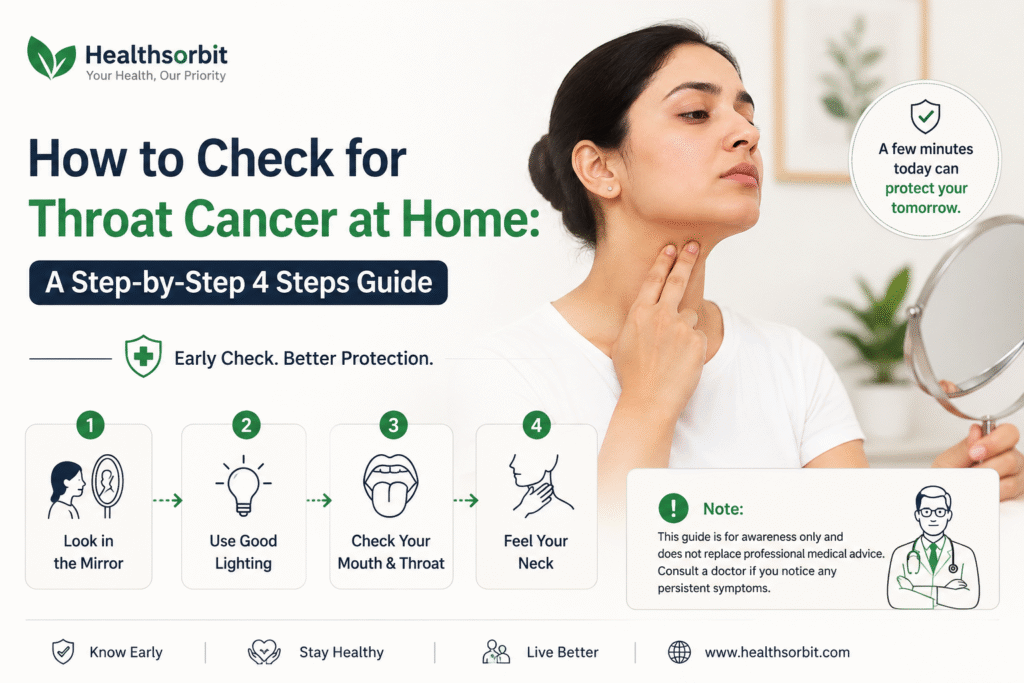
While no home method can replace a professional medical evaluation, knowing how to check for throat cancer at home through basic self-examination techniques can help you spot potential warning signs early and take timely action.
Step 1: Visual Inspection of the Throat
Stand in front of a well-lit mirror and open your mouth as wide as possible. Use a small flashlight to illuminate the back of your throat. Look for any unusual redness, white patches, lumps, or sores on the tonsils, the back of the tongue, or the soft palate. Healthy throat tissue appears pink and smooth. Anything that looks unusual or asymmetrical should be noted and reported to your doctor promptly.
Step 2: Feel for Lumps in the Neck
Throat cancer often causes the lymph nodes in the neck to swell. To perform a basic neck check, tilt your head slightly back and use your fingertips to gently press along both sides of the neck, starting from just below the ears and moving down toward the collarbone. You are feeling for any firm, painless lumps or areas that feel noticeably different on one side compared to the other. A lump that persists for more than two weeks should be evaluated by a physician without delay.
Step 3: Monitor Your Voice and Swallowing
Pay close attention to how your voice sounds over a period of days or weeks. Persistent hoarseness is a key symptom of laryngeal cancer, a type of throat cancer affecting the voice box. Also take note of any discomfort while swallowing, particularly if it consistently occurs on one side. Keep a simple symptom diary to track these changes, as this information will be highly useful when you visit your doctor.
Step 4: Stay Alert to Systemic Symptoms
Beyond the physical examination, knowing how to check for throat cancer at home also means being alert to systemic symptoms. These include chronic bad breath that does not improve with oral hygiene, coughing up blood, or a persistent cough that is unusual for you. None of these symptoms alone confirms a cancer diagnosis, but their persistence over time is a strong signal to seek professional evaluation immediately.
Who Should Be Extra Vigilant?
Certain individuals are at a higher risk of developing throat cancer and should make self-monitoring a regular habit. Smokers and former smokers are at significantly elevated risk, as tobacco is one of the leading causes of throat cancer. Heavy alcohol drinkers, especially those who also smoke, face a compounded risk that is much higher than either factor alone.
People who have tested positive for HPV particularly HPV-16 are also at increased risk for oropharyngeal cancer. Men are statistically more likely to develop throat cancer than women, and the risk increases with age, particularly after the age of 50. If you fall into any of these categories, knowing how to check for throat cancer at home becomes not just a helpful skill but an essential part of your ongoing health routine.
Benefits of Regular Home Self-Monitoring
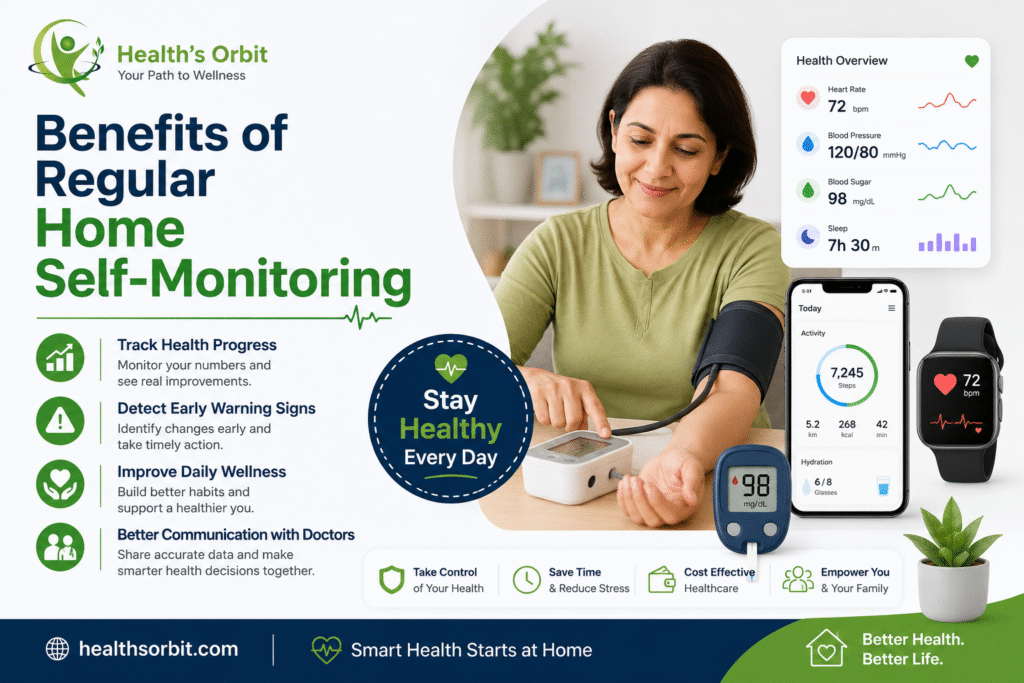
One of the greatest benefits of performing regular self-checks is catching changes early — before they develop into something more serious. Home monitoring builds a strong habit of health awareness. It empowers you to notice gradual changes that might go unnoticed during annual checkups. Furthermore, when you visit your doctor with a documented list of symptoms and their duration, it allows for a faster and more accurate diagnosis.
Self-monitoring also reduces anxiety. When you actively check and find nothing unusual, it provides peace of mind. On the other hand, finding something concerning early means you can act fast which is always the best-case scenario in any cancer-related situation.
Limitations of Home Checks and the Importance of Professional Diagnosis
It is essential to understand that home self-examination has real limitations. You cannot feel or see deep internal structures of the throat. Many early-stage tumors produce no visible or palpable symptoms at all. Additionally, conditions like acid reflux, oral thrush, and strep throat can mimic the appearance and symptoms of throat cancer, making self-diagnosis unreliable.
Home checks should function as a first alert system not a final answer. If you notice any persistent or worsening symptoms, the appropriate next step is always to consult a healthcare professional. A doctor will typically perform a visual laryngoscopy, order imaging such as a CT scan or MRI, and may take a biopsy to confirm or rule out cancer.
Conclusion
Understanding how to check for throat cancer at home is an empowering first step toward protecting your long-term health. By performing regular self-examinations, monitoring changes in your voice and swallowing, feeling for lumps in the neck, and staying alert to persistent unusual symptoms, you give yourself the best possible chance of catching problems early. However, home monitoring is never a substitute for professional medical advice. If anything you find during a self-check raises concern, do not wait to schedule an appointment with your doctor promptly. When it comes to cancer, early action is always the right action.
Frequently Asked Questions (FAQs)
1. Can throat cancer be detected at home without any medical equipment?
You can perform a basic visual and physical self-check at home using a mirror and flashlight to look for lumps, patches, or sores. However, a definitive diagnosis always requires professional medical tests like a laryngoscopy or biopsy.
2. How often should I perform a home throat cancer self-check?
It is a good practice to do a self-examination once a month, especially if you have risk factors like smoking, heavy alcohol use, or a history of HPV. Any symptom lasting more than two to three weeks should prompt a doctor’s visit.
3. What does an early-stage throat cancer lump feel like?
Early-stage lumps in the neck associated with throat cancer are typically firm, painless, and do not move easily under the skin. They differ from the tender, movable lumps that usually accompany a common infection.
4. Is a persistent sore throat always a sign of throat cancer?
No most sore throats are caused by viral or bacterial infections and resolve within a week or two. However, a sore throat that lasts longer than three weeks without an obvious cause should always be evaluated by a doctor.
5. At what age should I start monitoring for throat cancer symptoms?
While throat cancer can occur at any age, the risk increases significantly after 50. People with risk factors such as tobacco use, heavy drinking, or HPV infection should begin regular self-monitoring in their 40s or even earlier.