

I used to think happiness was something that would arrive after the next promotion, after moving to a better city, after fixing all my problems. I chased it for years, and every time I thought I was close, it slipped a little further away. Then, slowly and almost accidentally, I began to understand something that changed everything: learning how to be happy is not about finding the right circumstances. It is about building the right inner habits. This article is my honest, personal account of what worked, what did not, and what science actually says about lasting happiness.
What Does It Really Mean to Be Happy?
Before I figured out how to be happy, I had to unlearn a massive misconception. I believed happiness meant feeling joyful, excited, and cheerful every single hour of every day. That is not what it means. Happiness, according to experts, means accepting negative experiences and having the skills to manage and cope with them and even use them to make better decisions later. That reframing alone was a relief. It meant I did not have to eliminate sadness or stress from my life. I just had to build a healthier relationship with them.
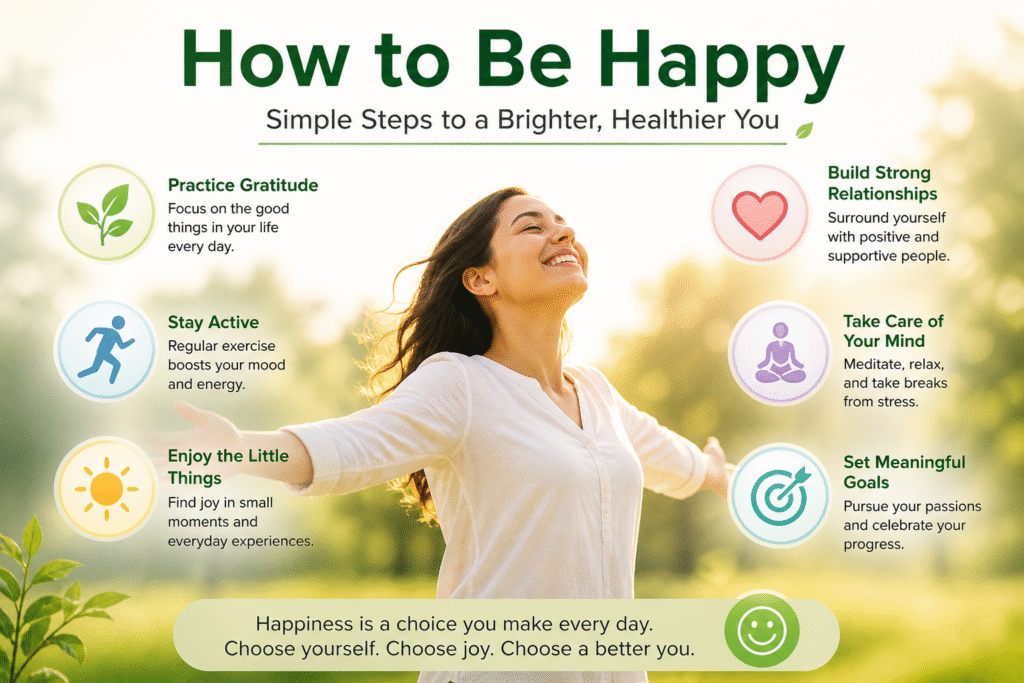
Happiness consists of three main components: positive emotions, engagement in activities, and meaning in life. Research shows that people with high life satisfaction typically score high in all three areas. When I mapped my own life against these three pillars, I realized I was scoring well in only one. That was my starting point.
Note: Happiness is not a permanent state of bliss. It is a dynamic balance of positive emotions, purposeful engagement, and meaning. Even the world’s happiest people experience sadness; they just process it differently.
The Happiness Myth I Believed for Too Long
There is a misconception that happiness is built-in and that we cannot change it. Science shows that our circumstances, how rich we are, what job we have, what material possessions we own matter less for happiness than we think. I had spent years betting my happiness on external upgrades. A better salary. A nicer apartment. A more exciting social life. None of it stuck.
What science and my own experience agree on is this: the internal architecture of your life matters far more than the external decoration. Once I stopped waiting for my circumstances to change and started working on my mindset, habits, and relationships, things genuinely shifted.
Science-Backed Ways I Learned How to Be Happy
1. Building Real Social Connections Changed Everything
This was the biggest lesson for me. I was introverted and proud of it, and I treated isolation as sophistication. I was wrong. Harvard University researchers spent 85 years scientifically studying happiness and concluded that people with strong, supportive relationships were happier, healthier, and lived longer regardless of material wealth, physical health, or job status.
Supportive relationships contribute to happiness by facilitating emotional and practical support, companionship, and a sense of belonging. When I started investing time in fewer but deeper friendships, my baseline mood improved noticeably within weeks. I stopped collecting contacts and started nurturing connections.
Each additional happy friend increases a person’s probability of being happy by about nine percent, according to researchers at Harvard and the University of San Diego. That statistic hit me hard. The people around you are not just company, they are a direct input to your emotional state.
2. Gratitude Turned Out to Be the Most Underrated Tool
I was deeply skeptical about gratitude journaling. It sounded like something people put on Pinterest. But the evidence behind it is genuinely robust. In a study conducted by psychologists at the University of California at Davis, people who wrote down five things they were grateful for each week were 25% happier than those who listed their hassles and annoyances after ten weeks.
Writing down three things you are grateful for at the end of each day, and why they happened, leads to long-term increases in happiness and decreases in depressive symptoms, according to a 2005 study from Martin Seligman, director of the Positive Psychology Center at the University of Pennsylvania.
I started with just three sentences every night before bed. Within a month, I noticed I was scanning the day for good things rather than replaying everything that went wrong. That mental shift was subtle but profound.
3. Movement Was Medicine I Had Been Ignoring
Exercise stimulates the release of endorphins and other neurotransmitters that act as mood lifters. Even small amounts of exercise can have an outsized effect on happiness. I did not need to train for a marathon. A 20-minute walk in the morning was enough to change the tone of my whole day.
Exercise is one of the best-known methods of boosting happiness, partly because it causes the brain to produce endogenous opioids, the brain’s own natural versions of morphine. Once I understood this, exercise stopped feeling like a chore and started feeling like self-medication in the best possible sense.
4. Mindfulness Helped Me Stop Living in My Head
Exercises like meditation that teach your brain to focus on the present instead of the past or future can increase feelings of self-acceptance, according to a 2011 study from the International Journal of Wellbeing.
I struggled with meditation. At first my mind was like a browser with 40 tabs open. But I started with just five minutes of focused breathing each morning. Over time, I noticed I was reacting less and responding more. I was less hijacked by anxious thoughts about the future and less haunted by replays of the past.
The University of Bristol identified seven happiness practices including mindfulness and meditation, and students who practiced them reported a 10-15% improvement in wellbeing, with more than half maintaining that positive outlook one to two years later.
5. Spending on Experiences, Not Things
This one surprised me. I used to reward myself with objects, new clothes, gadgets, home décor. The boost always faded fast. Research found that people who spent money on experiences like time with friends, going to the theatre or a concert were happier than those who spent money on material objects like clothes, jewellery, or electronics.
I now deliberately budget for experiences: a day trip with a friend, a cooking class, a live performance. The return on investment for happiness is dramatically higher.
6. Cutting Back on Social Media Was Harder Than I Expected
Seven preregistered experiments tested the potential happiness benefits of cutting back on smartphone and social media use. The studies found that long-term periods of abstinence from social media such as one month may ultimately enhance life satisfaction.
I did not go cold turkey. But I set app limits and stopped scrolling within an hour of waking up. That one change reduced my morning anxiety significantly. Comparison is a quiet thief of joy, and social media serves it on a platter.
7. Acts of Kindness Created a Surprising Feedback Loop
Genuinely engaging with goodwill toward others’ happiness has a bounce-back effect, making us feel happier and more connected as a side effect. I started volunteering once a month, and I began looking for small daily acts holding a door, complimenting a colleague’s work, checking in on a friend who had been quiet. The return to my own mood was immediate and real.
8. Sleep Was the Foundation I Had Overlooked
Sleep deprivation takes a big toll on health and happiness. Getting enough good quality sleep boosts mood, improves memory, increases the ability to concentrate, and strengthens the immune system. I had been treating sleep as negotiable for years. When I committed to seven to eight hours consistently, almost every other area of my life patience, creativity, emotional regulation improved in parallel.
9. Spending Time in Nature Reset My Nervous System
Spending time outside generally has a positive impact on mental well-being. Whether it is a walk down the street, sitting under a tree, or a hike in the mountains, connecting with nature has been shown to reduce stress, boost mood, and increase overall happiness.
I live in a city, so nature for me sometimes just meant sitting in a park for 20 minutes at lunch. It was enough. There is something about natural light and green space that genuinely quiets the noise in my head.
Comparison Table: Habits That Help vs. Habits That Hurt
| Habit | Effect on Happiness | Science Says | My Experience |
| Daily gratitude journaling | Strong positive | 25% happier after 10 weeks (UC Davis) | Mood shift within 30 days |
| Regular exercise (20–30 min) | Strong positive | Releases endorphins and opioids | Better mornings, less irritability |
| Deep social connections | Strong positive | Harvard 85-year study | Fewer but richer friendships |
| Mindfulness/meditation | Moderate-strong | 10-15% wellbeing improvement (Bristol) | Reduced reactivity over time |
| Time in nature | Moderate positive | Reduces stress hormones | Calmer, more present afternoons |
| Spending on experiences | Moderate positive | Outperforms material purchases | Better memories, more connection |
| Excessive social media | Negative | Reduces life satisfaction over time | Morning anxiety dropped when limited |
| Regular alcohol use | Negative | Raises baseline cortisol, worsens stress | Improved sleep quality |
| Chasing material possessions | Weak/no effect | Mood boost fades quickly | Realized objects rarely satisfy |
| Sleep deprivation | Strong negative | Harms mood, memory, immunity | Everything harder under 6 hours |
How Long Does It Take to Feel Happier?
This is a question I asked myself constantly in the early days. The honest answer: some changes are fast and some are slow. Here is a rough timeline based on my experience and the research:
| Strategy | Noticeable Effect Timeline |
| Exercise | 1 to 2 weeks |
| Reducing social media | 1 to 2 weeks |
| Gratitude journaling | 3 to 4 weeks |
| Improving sleep | 1 to 3 weeks |
| Deepening relationships | 1 to 3 months |
| Mindfulness practice | 4 to 8 weeks |
| Spending on experiences | Immediate (during) |
| Acts of kindness | Immediate |
Note: Happiness is built through repeated small actions, not dramatic life overhauls. Starting with just one or two habits from this list is enough. Sustainable change compounds slowly but powerfully.
Self-Compassion: The Piece I Almost Missed
Particularly in the West, people have adopted a propensity for self criticism as a cultural value, and tend to self punish when dealing with setbacks and failures. Excessive self criticism gets in the way of achieving your goals.
This hit close to home. I was my own harshest critic for years. Learning to speak to myself with the same kindness I extended to friends was genuinely transformative. I started using self-affirmations not the cheesy kind, but statements grounded in my actual values. Studies show that writing and then repeating self-affirmations makes people feel better, less stressed, more able to tackle challenges, feel greater self-esteem, and even make healthier choices.
A Simple Daily Happiness Framework I Now Use
After years of experimenting, I settled on a simple daily structure. This is not a rigid routine it is a set of micro-commitments that take less than 30 minutes combined:
Morning (10 minutes)
- 5 minutes of breathing or meditation
- Write one sentence about what I am looking forward to today
Midday (5 minutes)
- Step outside, even briefly
- One small act of kindness a message, a compliment, an offer to help
Evening (10 minutes)
- Three things I am grateful for and why they happened
- Reflect on one moment I handled well
Weekly
- One meaningful social experience not just hanging out, but genuinely connecting
- One experience over one purchase
Final Thoughts
Learning how to be happy was not the quick fix I hoped it would be. It was a slow, steady, sometimes uncomfortable process of unlearning bad habits and building better ones. But what surprised me most was how achievable it turned out to be not through grand gestures or perfect circumstances, but through small, consistent choices made every day.
If I could distill everything I have learned into one sentence, it would be this: happiness is less about what happens to you and more about how you show up for yourself, for others, and for the present moment you are actually living in.
FAQs
Q1. What is the fastest way to feel happier right now?
The fastest evidence-backed method is to do something kind for another person. Acts of generosity and compassion trigger an immediate emotional lift sometimes called helper’s high that is measurable and real. A close second is physical movement: even a brisk 10-minute walk releases mood-lifting neurotransmitters almost immediately.
Q2. Can you actually train your brain to be happy?
Yes. Happiness can be cultivated through intentional actions like building relationships, practicing gratitude, seeking meaningful experiences, and acts of kindness. With research-backed strategies, individuals can take control of their well-being and improve overall life satisfaction. Neuroplasticity, the brain’s ability to rewire itself, means that habits practiced consistently actually reshape the neural pathways associated with mood and emotional regulation.
Q3. Does money make you happy?
Money reduces stress caused by scarcity and provides a foundation for basic comfort, but its impact on deep happiness is limited. Research shows that wealthier people are happier than poorer people but not by a large margin. Beyond meeting essential needs, additional wealth shows diminishing returns on happiness. Spending money on experiences and relationships yields more happiness than accumulating possessions.
Q4. Why do I feel unhappy even when everything seems fine?
This is more common than people admit. A life that looks good on paper can still feel empty if it lacks meaning, genuine connection, or alignment with your values. Happiness is not just the absence of problems it is the presence of purpose, engagement, and authentic relationships. If everything seems fine but happiness feels elusive, it often points to a deficit in one of those three areas.
Q5. How is happiness different from pleasure?
Pleasure is a short-term emotional response to something enjoyable: a good meal, a funny video, a new purchase. Happiness, particularly in the psychological sense, is a longer-term state of well-being that includes life satisfaction and a sense of meaning. Pleasure fades quickly; happiness, when built on solid habits and meaningful connections, is far more durable and resilient.
Disclaimer This article is written from personal experience, supported by published research in positive psychology and behavioral science. It is intended for informational purposes and does not substitute for professional mental health support.