

Understanding what MCH is in a blood test is something most people never think about until a number on their lab report falls outside the normal bracket. Mean corpuscular hemoglobin MCH is a standard measurement included in almost every routine blood test, specifically as part of a complete blood count (CBC). It tells your doctor how much hemoglobin is present, on average, inside each of your red blood cells. That single number carries a surprising amount of diagnostic weight, and knowing how to read it makes you a far more informed patient.
What Is MCH in a Blood Test The Simple Explanation
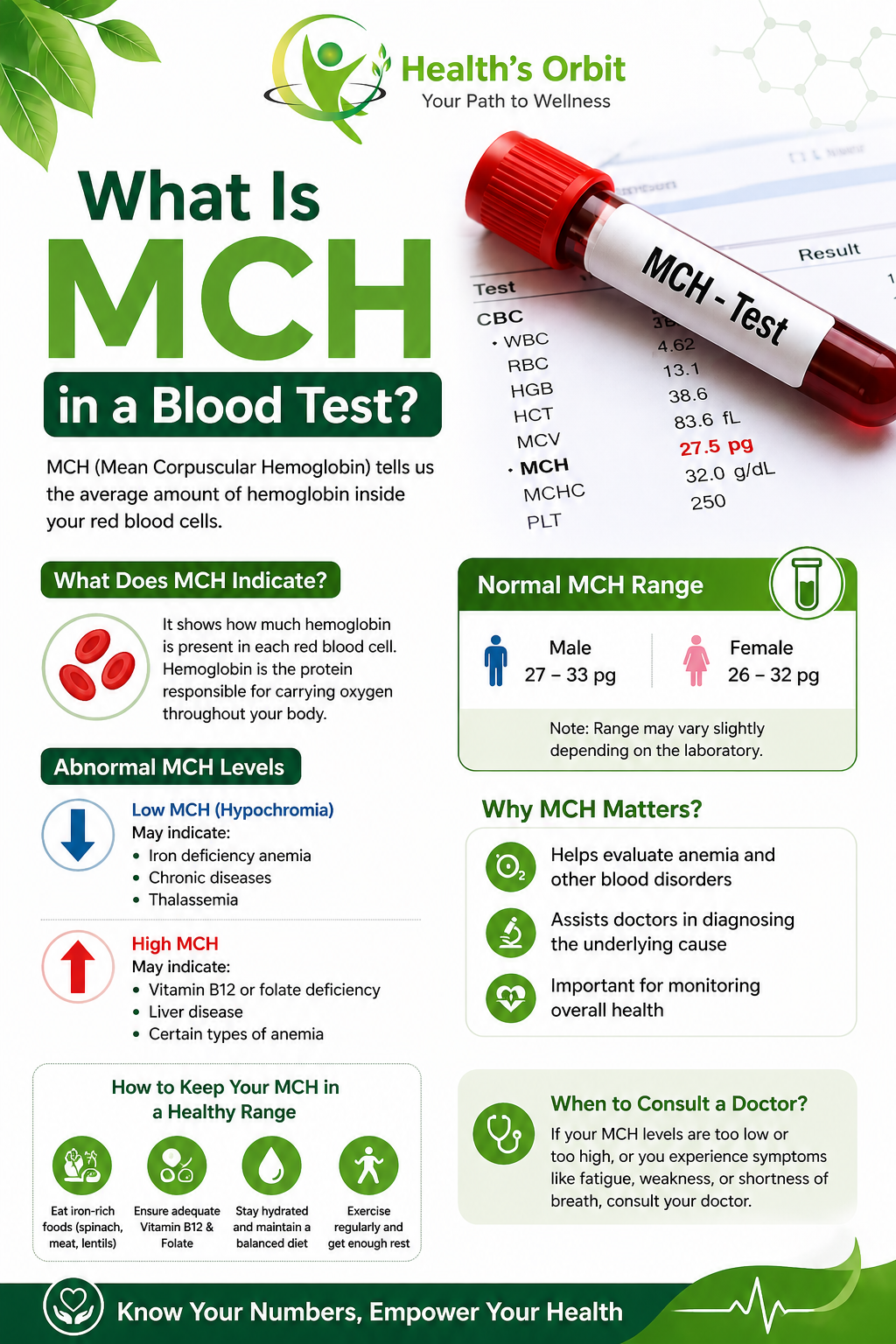
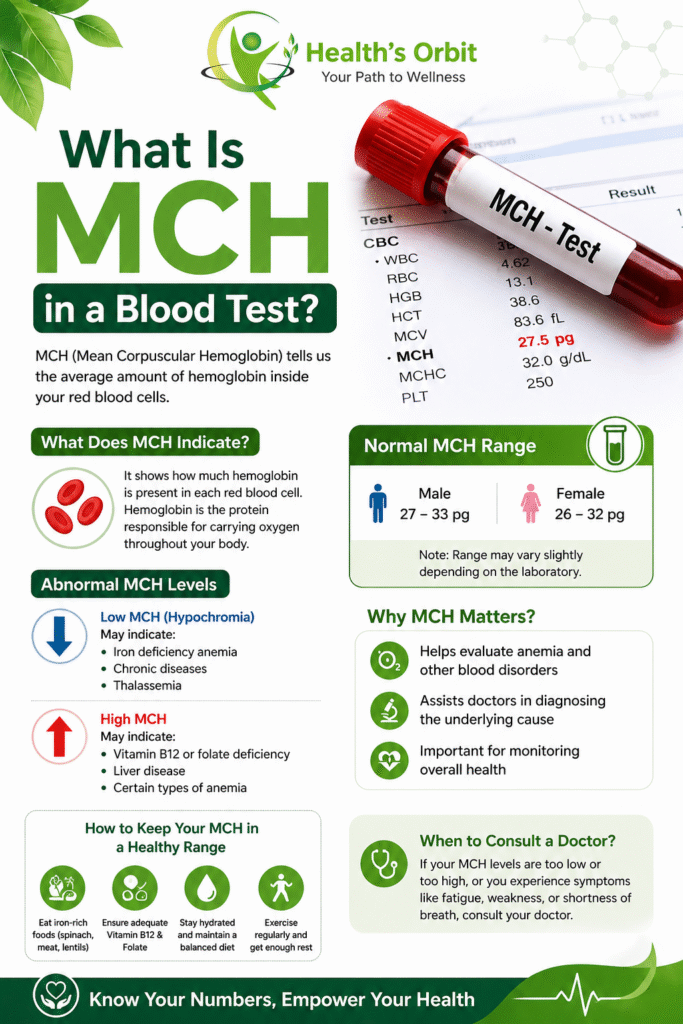
MCH stands for mean corpuscular hemoglobin. It measures the average quantity of hemoglobin contained within a single red blood cell. Hemoglobin is the iron-rich protein responsible for binding oxygen in the lungs and carrying it to every tissue in your body. Without adequate hemoglobin, your cells essentially run on empty which is why abnormal MCH levels so often show up as fatigue, breathlessness, or brain fog long before anything else does.
When your doctor orders a CBC, MCH is one of several red blood cell indices, a cluster of values that describe the physical and chemical characteristics of your red cells. MCH alone does not diagnose any condition, but read alongside MCV and MCHC, it helps narrow down the type and likely cause of any blood disorder that may be present.
27–33
Normal MCH range
(picograms/cell)
<27 pg
Low MCH — often
iron deficiency
>33 pg
High MCH — often
B12 or folate gap
5 min
Typical blood
draw duration
Note: Reference ranges vary slightly between labs and by age. Children typically have lower MCH ranges than adults. Always compare your result against the range printed on your specific lab report.
Understanding the MCH Normal Range
The normal MCH range for most adults sits between 27 and 33 picograms per red blood cell. A picogram is one trillionth of a gram, a tiny measurement, but one that carries real clinical meaning when it falls consistently outside the expected window. I learned this firsthand when my own result came back at 25 pg. My doctor explained it was not cause for immediate alarm, but that it warranted a closer look at my iron levels and that conversation eventually led to correcting a mild iron deficiency through diet alone within three months.
| MCH Level Scale — Adult Reference | |
| Low <27 pg | |
| Normal 27–33 pg | |
| High >33 pg | |
| Low — iron deficiency | |
| Normal — healthy | |
| High — B12/folate gap |
MCH, MCV, and MCHC — What Is the Difference?
One of the most confusing parts of reading a CBC for the first time is encountering three similar abbreviations sitting next to each other MCH, MCV, and MCHC. They are related but measure different things. MCH measures the average amount of hemoglobin per cell. MCV measures the average size of the cell itself. MCHC measures hemoglobin concentration relative to cell size a more precise value that combines both. Your doctor looks at all three together rather than any one in isolation, because the pattern across all three is what points toward a specific diagnosis.
| Test | Measures | Normal Range | Unit |
| MCH | Hemoglobin per red cell | 27–33 | pg |
| MCV | Average red cell size | 80–100 | fL |
| MCHC | Hemoglobin concentration in cell | 32–36 | g/dL |
| RDW | Variation in red cell size | 11.5–14.5% | % |
Causes of Low and High MCH
What Causes Low MCH?
A low MCH result below 27 pg means your red blood cells are carrying less hemoglobin than they should. The most common reason is iron deficiency, since iron is the raw material the body needs to build hemoglobin. When iron stores fall through a low-iron diet, heavy periods, chronic blood loss, or poor absorption hemoglobin production drops, and MCH follows. A less common but important cause is thalassemia, an inherited condition where the genetic instructions for making hemoglobin are faulty. Treating thalassemia the same way as iron deficiency can cause harm, which is why getting an accurate diagnosis matters so much before starting supplementation.
What Causes High MCH?
High MCH above 33 pg means individual red blood cells contain more hemoglobin than normal, usually because the cells themselves have grown abnormally large. The most common culprit is a deficiency in vitamin B12 or folate, both of which are essential for normal red blood cell development. Without them, cells grow oversized and irregular. Excessive alcohol use is another well-established trigger, as it directly interferes with folate absorption. Certain medications, particularly some used in chemotherapy and HIV treatment can also elevate MCH as a side effect.
Symptoms to Watch For
Abnormal MCH levels rarely announce themselves loudly. The symptoms creep in gradually so gradually that most people blame stress, poor sleep, or simply getting older. Knowing what to watch for gives you a genuine head start.
⬇ Low MCH Symptoms
- Persistent fatigue and weakness
- Pale or yellowish skin
- Shortness of breath
- Brittle nails and hair loss
- Frequent headaches
- Cold hands and feet
- Craving ice or clay (pica)
⬆ High MCH Symptoms
- Deep fatigue and low energy
- Tingling or numbness in limbs
- Memory difficulties or brain fog
- Sore or swollen tongue
- Mouth sores
- Mood changes or mild depression
- Unsteady gait or balance issues
⚠
Seek urgent care if: you experience chest pain, severe shortness of breath, fainting, rapid heartbeat, or jaundice alongside an abnormal MCH result. These may indicate a more serious condition requiring immediate evaluation.
How the MCH Blood Test Is Done
MCH is not a standalone test; it is automatically calculated as part of a complete blood count (CBC). The process is quick and straightforward. A phlebotomist cleans the inside of your elbow, applies a tourniquet, and draws a small blood sample into a collection vial. An automated analyser then measures your blood cells and calculates MCH by dividing the hemoglobin level by the red blood cell count and multiplying by ten. No fasting or special preparation is needed in most cases, though your doctor may request fasting if additional panels are running at the same time.
My tip: Always tell your doctor about any supplements you are taking before a blood draw. Iron supplements can temporarily normalise a low MCH reading, masking the true picture and delaying an accurate diagnosis.
Treatment Based on MCH Results
There is no treatment for MCH itself; the number is a marker, not the disease. What you treat is the underlying cause. For low MCH caused by iron deficiency, the approach centres on iron-rich foods such as red meat, spinach, lentils, and fortified cereals, often paired with oral iron supplements. Vitamin C taken alongside iron-rich meals significantly improves absorption. For thalassemia, management is lifelong and involves monitoring rather than iron loading. For high MCH caused by B12 deficiency, treatment typically involves B12 injections or high-dose oral supplements, with dietary sources including eggs, dairy, and fortified plant milks. Folate deficiency responds well to folic acid supplements alongside leafy greens, legumes, and fortified grains. Where alcohol is the cause, reducing intake and supporting nutrition tends to bring MCH back toward normal over several months.
| Cause | MCH Result | Primary Treatment | Recovery Time |
| Iron deficiency | Low | Iron-rich diet + supplements | 3–6 months |
| Thalassemia | Low | Monitoring; avoid excess iron | Lifelong |
| B12 deficiency | High | B12 injections or supplements | 4–8 weeks |
| Folate deficiency | High | Folic acid + leafy greens | 3–6 months |
| Alcohol use | High | Reduce alcohol + nutrition support | Months |
My Final Thoughts
When I first saw that out-of-range MCH number on my report, it felt like a warning light with no manual to consult. Understanding what is MCH in a blood test truly understanding it turned that anxiety into clarity and, eventually, into action that meaningfully improved my health.
The most important takeaway is that MCH is a signal, not a sentence. An abnormal result is the beginning of a diagnostic conversation, not a diagnosis in itself. Used alongside the other values could make a real difference.
In your CBC, it helps your doctor pinpoint what is happening in your blood and why. If your MCH is outside the normal range, ask your doctor what it means for your specific situation. That one question
Frequently Asked Questions
What is MCH in a blood test and why does it matter?
MCH stands for mean corpuscular hemoglobin. It measures the average amount of hemoglobin inside each red blood cell and is reported as part of a complete blood count (CBC). It matters because abnormal values help doctors identify the type and likely cause of anemia, guiding more targeted treatment than hemoglobin levels alone can provide.
What does a low MCH level mean?
A low MCH below 27 pg means red blood cells contain less hemoglobin than normal. This is most commonly caused by iron deficiency anemia but can also result from thalassemia or chronic disease. Symptoms include fatigue, pale skin, and brittle nails. Treatment depends on the underlying cause and may include dietary changes or iron supplementation.
What causes high MCH in a blood test?
High MCH above 33 pg usually means red blood cells are larger than normal and carrying excess hemoglobin. The most common causes are vitamin B12 deficiency, folate deficiency, and excessive alcohol use. Treatment typically involves B12 or folate supplementation and addressing the root dietary or absorption issue.
What is the normal MCH range for adults?
The normal MCH range for adults is 27 to 33 picograms per red blood cell. Values below 27 pg are considered low and values above 33 pg are considered high. Always compare your result against the specific range on your lab report, as reference values vary slightly between laboratories.
Can you have normal MCH but still have anemia?
Yes. Normocytic anemia where cells are normal in size and hemoglobin content but fewer in number will not produce an abnormal MCH. Conditions like chronic kidney disease or early anemia of chronic inflammation can cause anemia while MCH stays within the normal range. Your doctor evaluates MCH alongside hemoglobin, hematocrit, and red blood cell count for the full picture.