


Have you ever looked at someone tall and quietly wondered, “Could I have been taller?” You are not alone. Millions of people search for ways on how to increase height every single day and the good news is, there is far more within your control than you might think. Understanding the science behind height growth requires looking beyond quick fixes and embracing a holistic, evidence-based approach. Whether you are a teenager in your golden growing years or an adult looking to optimise posture and appearance, this comprehensive guide covers everything you need to know backed by evidence, written with experience.
1. The Science Behind Human Height Growth
Height is not a random lottery. It is a complex biological process governed by your bones, hormones, and nutrition working together in a precise, timed sequence.
Your height is primarily determined by the growth of your long bones, the femur (thigh), tibia (shin), and the vertebrae of your spine. These bones grow through structures called growth plates (also known as epiphyseal plates), located at each end of a long bone. During childhood and adolescence, these plates continuously produce new bone tissue, causing you to grow taller over time.
The entire process is driven by Human Growth Hormone (HGH), produced by the pituitary gland. HGH stimulates the liver to release Insulin-like Growth Factor 1 (IGF-1), which directly signals the growth plates to generate new bone cells.
Here is the critical point most people miss: once puberty ends typically between ages 16–18 in girls and 18–21 in boys the growth plates fuse and close permanently. After that, bone lengthening becomes biologically impossible. However, your apparent height, posture, spinal health and overall body composition can still be significantly improved at any age.
2. Genetics vs. Lifestyle: What Really Controls Your Height?
This is one of the most debated topics in health science. Research consistently shows that genetics accounts for approximately 60–80% of your final adult height. Your parents’ height remains the strongest single predictor of how tall you will ultimately be.
But here is where it gets genuinely interesting: that remaining 20–40% is entirely within your control. This “environmental” component includes:
- Nutrition quality during childhood and adolescence
- Quality and duration of nightly sleep
- Type and frequency of physical activity and exercise
- Hormonal health and overall balance
- Overall health and freedom from chronic illness
Think of genetics as your ceiling but your lifestyle determines exactly how close you get to that ceiling. Many people, due to poor nutrition, inadequate sleep, or chronic stress during their formative growing years, never reach their full genetic potential. The goal of this guide is to help you reach yours.
3. Key Growth Factors Overview
Table 1: Major Factors That Influence Height and Their Controllability
| Growth Factor | Impact on Height | Controllable? | Key Takeaway |
|---|---|---|---|
| Genetics (Parental Height) | 60–80% influence on final height | No | Sets your height ceiling |
| Nutrition & Diet | High especially during growth years | Yes | Maximizes genetic potential |
| Sleep & HGH Release | Very High 70% of HGH in deep sleep | Yes | Critical in adolescence |
| Exercise & Activity | Moderate stimulates HGH & posture | Yes | Decompresses spine & builds tone |
| Hormonal Balance | High thyroid, HGH, IGF-1 | Partial | Consult physician if needed |
| Stress & Cortisol | Moderate chronic stress lowers HGH | Yes | Manage with mindfulness |
| Illness & Medications | Variable impact | Partial | Seek medical guidance |
4. Best Exercises to Increase Height Naturally
Exercise is one of the most powerful tools in your height-growth toolkit especially during your growing years. Even after growth plates close, the right exercises decompress the spine, dramatically improve posture, and help you present and function at your absolute tallest.
4a. Stretching and Spinal Decompression Exercises
- Hanging Bar Stretches: Hanging from a pull-up bar for 20–30 seconds at a time decompresses the vertebrae and reduces the spinal compression that accumulates naturally throughout the day. Aim for 3–5 sets daily.
- Cobra Stretch (Bhujangasana): Push your upper body up while keeping hips on the floor. This lengthens the spine and simultaneously strengthens the back muscles that support upright posture.
- Cat-Cow Stretch: On all fours, alternate between arching your back upward and letting it sag gently downward. Mobilises the entire spine and reduces compression from prolonged sitting.
4b. High-Intensity and Jumping Exercises
Research suggests that activities involving jumping, sprinting, and impact loading may actively stimulate growth plate activity during adolescence. High-value activities include:
- Basketball and volleyball (jumping-dominant sports)
- Jump rope and skipping
- Swimming (full-body elongation with zero spinal compression)
- Sprint intervals and HIIT training
Table 2: Exercise Comparison — Best Exercises for Height and Posture Improvement
| Exercise Type | Best For | Age Group | Recommended Frequency |
|---|---|---|---|
| Hanging Bar Stretch | Spinal decompression | All ages | Daily — 3–5 sets × 30 sec |
| Swimming | Full-body elongation + HGH | All ages | 3–5 times per week |
| Yoga & Pilates | Posture + core strength | All ages | 3–4 times per week |
| Basketball/Volleyball | Growth plate stimulation | Under 21 | Daily if possible |
| Sprint / HIIT | HGH release via high intensity | Teens+ | 2–3 times per week |
| Cobra / Cat-Cow | Spine mobility & flexibility | All ages | Daily — morning & evening |
| Deadlifts & Rows | Posterior chain strength | Adults | 2 times per week |
5. Nutrition for Height: What You Eat Matters Enormously
Without the right building blocks, your body simply cannot reach its full potential no matter how consistently you sleep or exercise. If you are wondering how to increase height during your formative years, getting your nutrition right is the non-negotiable foundation for optimal growth.”
5a. The Non-Negotiable Nutrients for Height Growth
- Protein: The most critical macronutrient for height. Bones, muscles, and growth hormone itself are constructed from protein. Prioritise eggs, chicken, fish, dairy, legumes and tofu at every meal.
- Calcium: The primary mineral in bone tissue. Adequate calcium throughout childhood and adolescence is essential for building dense, strong bones.It is naturally abundant in dairy products and leafy green vegetables, and it is commonly found in almonds and various fortified foods (such as plant-based milk alternatives, breakfast cereals, and breads).
- Vitamin D: Works hand-in-hand with calcium. Without sufficient Vitamin D, your body cannot absorb calcium efficiently. Sun exposure, fatty fish, egg yolks and fortified foods maintain optimal levels.
- Zinc: Plays a vital role in cell division and growth. Zinc deficiency has been directly linked to stunted growth in children. Rich sources: meat, shellfish, pumpkin seeds, and chickpeas.
- Vitamin K2: Directs calcium into bones rather than soft tissues. A lesser-known but critically important nutrient. Sources: fermented foods, hard cheeses, and egg yolks.
Table 3: Top Foods for Height Growth — Key Nutrients and Benefits
| Food | Key Nutrients | Benefit for Height Growth |
|---|---|---|
| Eggs | Protein, Vitamin D, B12 | Supports bone growth and HGH production |
| Milk & Dairy | Calcium, Protein, Vitamin D | Builds bone density and promotes growth |
| Salmon & Tuna | Vitamin D, Omega-3, Protein | Supports bone health and hormone function |
| Spinach & Kale | Calcium, Vitamin K, Iron | Essential for bone mineralisation |
| Chicken & Turkey | High Protein, Zinc | Builds muscle and bone tissue |
| Beans & Lentils | Protein, Zinc, Iron | Stimulates growth hormone release |
| Almonds & Nuts | Calcium, Magnesium, Vitamin E | Improves bone density and hormonal health |
| Sweet Potatoes | Vitamin A, Dietary Fibre | Promotes healthy bone cell production |
| Berries (all varieties) | Vitamin C, Antioxidants | Supports collagen production for bones |
6. Sleep: The Secret Growth Hormone Factory
Here is a fact that surprises most people: approximately 70% of Human Growth Hormone is released during deep sleep, specifically during slow-wave sleep cycles. This makes quality sleep not merely a health luxury, it is a biological necessity for height growth. Teenagers who consistently sleep fewer than 8 hours per night may genuinely compromise their height potential.
Optimal Sleep by Age Group
- Ages 6–13: 9–11 hours per night
- Ages 14–17: 8–10 hours per night
- Ages 18–25: 7–9 hours per night
- Adults 26+: 7–8 hours per night for hormonal and spinal recovery
Tips to Maximise Growth Hormone Release During Sleep
- Sleep in a cool, dark room 18–20°C is physiologically optimal.
- Avoid screens for 60 minutes before bed to protect your natural growth hormones.
- Avoid heavy meals within 2 hours of sleep (insulin spikes suppress HGH release).
- Sleep on a firm, supportive mattress that keeps your spine in a neutral position.
7. Posture Correction: Unlock Your Hidden Height
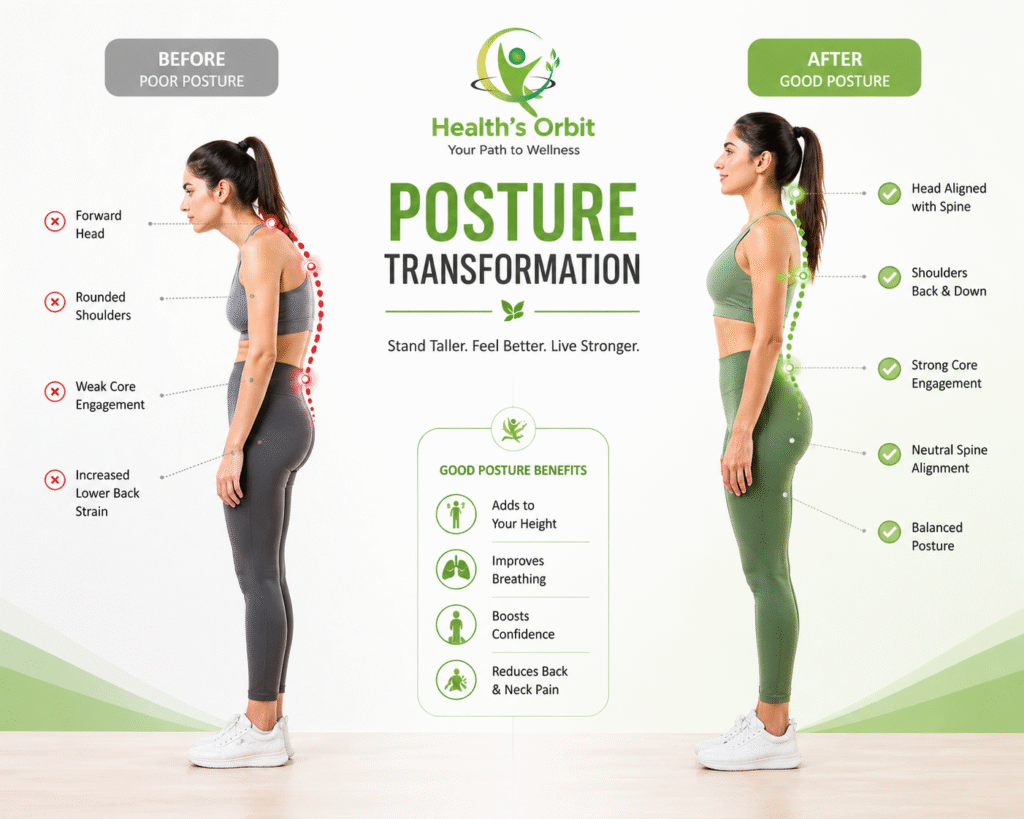
This section is arguably the most immediately actionable for adults. Poor posture, specifically forward head posture, rounded shoulders, and exaggerated lumbar curvature can visibly reduce your standing height by 1 to 3 full inches. Years of sitting at desks, looking at phones, and sedentary living have left most modern adults significantly shorter than their skeleton actually allows.
Key Posture Correction Techniques
- Chin Tucks: Gently pull your chin straight back, elongating the back of the neck. Perform 10 reps, 3 times daily.
- Wall Angels: Stand against a wall with heels, back, and head touching. Raise and lower your arms in a snow-angel motion while maintaining full contact. Exceptional for correcting rounded shoulders.
- Thoracic Extension Over Foam Roller: Place a foam roller across your mid-back and extend over it gently. Directly counteracts the hunching that chronically compresses height.
- Posterior Chain Strengthening: Deadlifts, seated rows, and glute bridges build the muscles that hold you upright. A strong back is a taller back.
8. Myths vs. Facts: Clearing the Confusion Around Height Growth
The internet is saturated with misinformation about height growth. Here are the most common myths and what the science actually says:
- MYTH: Height-increasing supplements and pills work.
- FACT: No supplement can increase bone length after growth plates close. Any product claiming otherwise lacks scientific backing and may be harmful.
- MYTH: Daily stretching makes you permanently taller.
- FACT: Stretching decompresses the spine and improves posture. It does not increase actual bone length.
- MYTH: Drinking milk as an adult increases height.
- FACT: Milk is excellent for bone health at any age. But it will not restart growth plate activity once those plates have fused.
- MYTH: Hanging exercises add permanent inches to height.
- FACT: Hanging helps decompress vertebrae temporarily and supports spinal health. It is not a permanent height booster.
- MYTH: You stop growing the moment puberty ends.
- FACT: While bone growth stops, posture, disc health, and muscle balance continue influencing how tall you present yourself throughout life.
9. Age-Related Realities: What Is Still Possible After 21?
HIf you are over 21 and your growth plates have closed, you will not grow taller through lifestyle changes alone. This is a biological reality, not a limitation anyone imposed on you.
However, there is genuinely meaningful progress still available to you:
- Posture improvement can realistically add 1–3 visible inches to your standing height
- Core strengthening helps you maintain your full height throughout the entire day
- Weight management reduces spinal compression and improves visible height
- Decompression practices (yoga, swimming, hanging) preserve spinal health and flexibility
- Confident posture and body language profoundly change how others perceive your height
For growing adolescents, every strategy in this guide has genuine, documented potential to help you reach your full genetic height. Do not let those years pass underutilised.
10. Your Practical Daily Routine for Maximum Height Potential
Consistency is the foundation of any effective growth protocol. By integrating these specific habits into your lifestyle, you are not just targeting temporary gains, but optimizing your body’s natural environment for development. Following this structured routine is the most reliable way to learn how to increase height by supporting skeletal health, spinal alignment, and hormonal function through sustainable, daily action.
Morning Routine — 20 Minutes
- 5 minutes: Cat-cow stretches + cobra pose (spine mobilisation)
- 5 minutes: Hanging bar 3 to 4 sets × 30 seconds (spinal decompression)
- 10 minutes: Wall angels + chin tucks + full posture reset
Throughout the Day
- Stand and walk with conscious posture shoulders back, core lightly engaged
- Take active breaks from sitting every 45–60 minutes
- Drink adequate water (spinal discs are approximately 80% water)
Nutrition Priorities
- Prioritise calcium and Vitamin D daily through food or supplementation as needed
- Minimise processed foods and excess sugar both spike insulin and suppress HGH
Evening Routine
- 20 minutes of light stretching or yoga before bed
- No screen time for 60 minutes before sleep
- Consistent sleep and wake time protect your natural HGH production cycle
Weekly Commitments
- 3 swimming sessions or jumping sport sessions per week
- 2 strength training sessions: deadlifts, rows and squats
Conclusion
Understanding how to increase height is ultimately about understanding your own body, its biology, its timeline, and its real possibilities. Genetics sets your range, but the daily choices you make determine exactly where within that range you land.
If you are still growing, this is your golden window. Prioritise sleep, nutrition, movement, and stress management and do it consistently. If you have passed your growing years, meaningful improvement is still available through posture correction, spinal health optimisation, and strategic strength training.
No shortcut, pill, or gadget will ever replace the fundamentals. But the fundamentals applied consistently genuinely work. Start today. Your tallest, healthiest, most confident self is built one good habit at a time.
Frequently Asked Questions (FAQs)
Q1. Can adults increase height after the age of 21?
After growth plates close typically by age 21 bone lengthening is no longer possible. However, posture correction and spinal decompression exercises can visibly add 1–3 inches to your standing height and make a genuinely noticeable difference.
Q2. Which exercise is most effective for increasing height naturally?
Hanging bar stretches, swimming, and yoga rank among the most effective options. They decompress the spine, stimulate HGH release, and dramatically improve posture all of which maximize your visible height.
Q3. Does sleep quality genuinely affect height growth?
Absolutely. Approximately 70% of Human Growth Hormone is released during deep sleep. Consistently sleeping 8–10 hours during adolescence is one of the single most powerful height-optimisation strategies available.
Q4. Which foods are most effective for height growth?
Eggs, dairy, salmon, leafy greens, and legumes provide the protein, calcium, and Vitamin D your body requires to maximise bone growth during your developing years. Prioritise these at every meal.
Q5. Is it realistically possible to gain 2–3 inches in height naturally?
For teenagers still actively growing, yes optimising nutrition, sleep, and exercise can help you reach your full genetic height potential, which may be several inches more than a neglected lifestyle would allow. For adults, posture correction can deliver similar visible results.
| ⚠ Medical DisclaimerThis article is intended for informational and educational purposes only. It does not constitute medical advice, diagnosis, or treatment. Individual results vary based on genetics, age, and overall health. Always consult a qualified healthcare professional or physician before starting any new diet, exercise programme, or supplement regimen — especially for children and adolescents. If you suspect a growth disorder or hormonal imbalance, seek medical evaluation promptly. |