

Mental health care has never been more important than it is today. Yet many people still feel confused when choosing the right professional. The terms are often used interchangeably, but they are not the same. Understanding the difference between a psychologist vs therapist can help you make a more informed decision about your mental health journey. In this article, we break down both roles clearly so you know exactly what to expect from each one.
Quick Comparison: Psychologist vs Therapist at a Glance
Before diving into the details, here is a clear side-by-side look at the key differences in the psychologist vs therapist debate.
| Feature | Psychologist | Therapist |
| Education | Doctoral Degree (PhD/PsyD) | Master’s Degree |
| Can I Diagnose? | Yes | Usually No |
| Psychological Testing | Yes | No |
| Prescribe Medication | Rarely (select states) | No |
| Therapy Sessions | Yes | Yes |
| Session Cost | Higher | More Affordable |
| Best For | Complex disorders, assessments | Everyday emotional support |
| Work Settings | Hospitals, research, private | Clinics, community, online |
What Is a Psychologist?
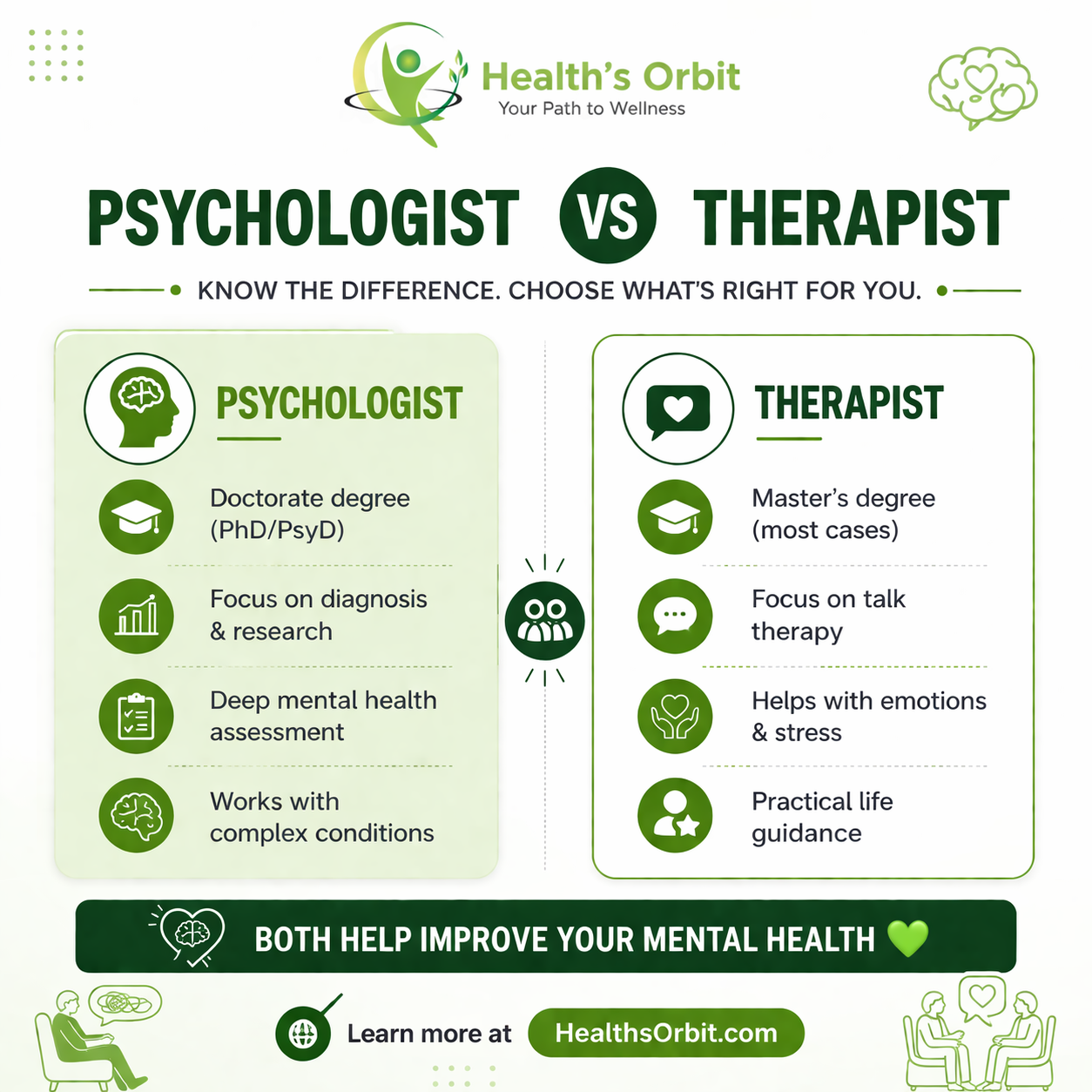
A psychologist is a highly trained mental health professional who holds a doctoral degree — typically a PhD, PsyD, or EdD in psychology. Their education involves years of academic study, research, and supervised clinical practice. Because of this advanced training, psychologists are qualified to assess, diagnose, and treat a wide range of mental health conditions.
One of the key distinctions in the psychologist vs therapist conversation is that psychologists are trained to conduct psychological testing and assessments. These evaluations help identify conditions like ADHD, learning disabilities, anxiety disorders, and depression with a greater level of clinical precision. In most regions, psychologists cannot prescribe medication, although some states in the US have granted prescription privileges to licensed psychologists.
Psychologists often work in research institutions, hospitals, schools, and private practices. Their approach tends to be more science-driven, with a strong focus on evidence-based treatment methods such as cognitive behavioral therapy (CBT), dialectical behavior therapy (DBT), and other structured psychological interventions.
What Is a Therapist?
The term ‘therapist’ is a broad label that covers many different mental health professionals. A therapist may be a licensed counselor, licensed clinical social worker (LCSW), marriage and family therapist (MFT), or licensed professional counselor (LPC). Most therapists hold a master’s degree in their respective field, along with supervised clinical hours and state licensure.
When comparing a psychologist vs therapist in terms of education, therapists generally have less academic training than psychologists but are fully equipped to provide effective mental health support. They specialize in talk therapy, helping clients work through personal struggles, relationship problems, trauma, grief, and everyday emotional challenges.
Therapists work in a variety of settings, including private practices, community health centers, schools, and non-profit organizations. Their sessions are typically conversational and collaborative. They help clients develop coping strategies, gain self-awareness, and build healthier thought patterns over time.
How Do Psychologists and Therapists Work?
Psychologist’s Approach
Psychologists take a more clinical and research-oriented approach to mental health. In a typical session, a psychologist may begin with a comprehensive evaluation to understand the client’s psychological history, symptoms, and behavioral patterns. They use structured assessments and standardized tools to form accurate diagnoses.
Treatment plans developed by psychologists are often evidence-based and highly structured. For example, a psychologist treating someone with obsessive-compulsive disorder (OCD) might use exposure and response prevention (ERP), a well-researched technique shown to be highly effective. Their work is grounded in psychological science, and they stay updated on the latest research in the field. This is a critical point when weighing up the psychologist vs therapist decision.
Therapist’s Approach
Therapists focus primarily on building a trusting relationship with the client. This therapeutic alliance is the foundation of their work. Sessions are usually weekly and may last between 45 to 60 minutes. The therapist listens carefully, asks thoughtful questions, and guides the client toward self-discovery and emotional healing.
Different therapists use different approaches. Some may practice person-centered therapy, which emphasizes empathy and unconditional positive regard. Others may use solution-focused therapy, which helps clients identify practical solutions to their problems. The variety of methods available means therapists can tailor their approach to fit each individual client’s needs — another important factor in the psychologist vs therapist comparison.
Benefits of Seeing a Psychologist
There are several important benefits to working with a psychologist. First, psychologists are qualified to diagnose mental health disorders accurately. This is crucial when someone is unsure whether they have a clinical condition or simply going through a rough patch. Second, psychologists are trained in complex therapeutic techniques that address deep-rooted psychological issues.
Additionally, psychologists can conduct psychological testing, which is particularly valuable for people who need documentation for educational accommodations or disability claims. Their scientific background also means they are skilled at identifying patterns in behavior and thought that a client may not even be aware of. For those dealing with severe mental illness or complex trauma, the edge a psychologist brings in the psychologist vs therapist comparison can be especially valuable.
Benefits of Seeing a Therapist

Therapists offer a wide range of benefits, particularly for people dealing with everyday emotional challenges. Therapists are often easier to find and more affordable than psychologists. Their services are widely available in community health centers and online platforms, making mental health support more accessible to a broader population.
Therapy is also highly flexible. Whether you are navigating relationship difficulties, work stress, grief, or personal growth, a therapist can provide tailored support. Many people find that regular therapy sessions help them develop stronger emotional resilience, improve their communication skills, and feel more in control of their lives. In the debate, therapists win on accessibility and day-to-day emotional support.
Possible Limitations to Consider
While both professionals offer tremendous value, it is important to understand their limitations. In the psychologist vs therapist comparison, one limitation of psychologists is their cost. Because of their advanced degrees and specialized training, psychologist sessions tend to be more expensive. Not all insurance plans cover their services at the same rate as a licensed therapist.
As for therapists, the main limitation is their scope of practice. A therapist cannot conduct formal psychological testing or provide a clinical diagnosis in the way a psychologist can. If someone needs a formal evaluation for a learning disability or a complex psychiatric condition, a therapist alone may not be sufficient. In such cases, a referral to a psychologist or psychiatrist is typically recommended.
Furthermore, neither psychologists nor therapists can prescribe medication. If medication is needed as part of a treatment plan, a referral to a psychiatrist or a primary care physician is necessary. This is an important distinction to keep in mind when exploring your options.
Who Should See a Psychologist vs Therapist?

Choosing between a psychologist vs therapist depends largely on your individual needs and circumstances. If you are experiencing persistent symptoms of depression, anxiety, or another mental health disorder and need a formal diagnosis, a psychologist may be the right first step. Psychologists are also the preferred choice for psychological testing, such as IQ assessments or evaluations for autism spectrum disorder.
On the other hand, if you are looking for ongoing emotional support, help with relationship issues, or a space to process life’s challenges, a therapist is an excellent choice. Most people who seek mental health care for the first time start with a therapist. From there, the therapist can refer you to a psychologist or psychiatrist if your needs require more specialized care.
It is also worth noting that some people benefit from seeing both at the same time. For instance, a psychologist might conduct an initial assessment and create a treatment plan, while a therapist handles the ongoing weekly sessions. This collaborative approach ensures that you receive comprehensive, well-rounded care.
Conclusion
The debate of psychologist vs therapist is not about which one is better. Both professionals play essential roles in the mental health care system. Psychologists bring deep clinical expertise, diagnostic capability, and research-based treatments. Therapists offer accessible, compassionate, and flexible support for a wide range of emotional and behavioral challenges.
What matters most is finding the right fit for your unique situation. If you are unsure where to start, reach out to your primary care doctor or call a local mental health clinic. Taking the first step toward professional support is always the right decision, no matter which path you choose.
Your mental health deserves the same attention and care as your physical health.
Frequently Asked Questions (FAQs)
Q.1 What is the main difference between the two mental health professionals?
A psychologist holds a doctoral degree and is qualified to diagnose mental health conditions and conduct psychological testing, while a therapist typically holds a master’s degree and focuses on providing talk therapy and emotional support.
Q.2 Can a therapist diagnose mental health disorders?
In most cases, therapists are not authorized to provide formal psychiatric diagnoses. For an official diagnosis, you would need to see a psychologist or a licensed psychiatrist.
Q.3 Is a psychologist more expensive than a therapist?
Generally, yes. Psychologists tend to charge higher fees due to their advanced doctoral-level training and specialization. Therapists are often more affordable and widely covered by insurance plans.
Q.4 Can I see both a psychologist and a therapist at the same time?
Absolutely. Many people benefit from a collaborative approach where a psychologist handles assessment and diagnosis while a therapist provides ongoing weekly support sessions.
Q.5 Who should I see first — a psychologist or a therapist?
For most people, starting with a therapist is a practical and accessible first step. If your needs require formal diagnosis or psychological testing, your therapist can refer you to a psychologist or another specialist.
Q.6 How do I decide between the two professionals for anxiety?
If your anxiety is severe and you need an official diagnosis, a psychologist is the better choice. For ongoing coping support and talk therapy, a therapist is an excellent and more affordable option.