

When you receive a genetic test result or sit through a biology class, the word heterozygous tends to appear without much explanation. Understanding what heterozygous means is not just academic; it can directly shape how you interpret your DNA, assess health risks, and make informed decisions about family planning. This guide breaks down the concept clearly, from the basics of alleles to real-world medical implications.
Understanding the Heterozygous Definition in Genetics
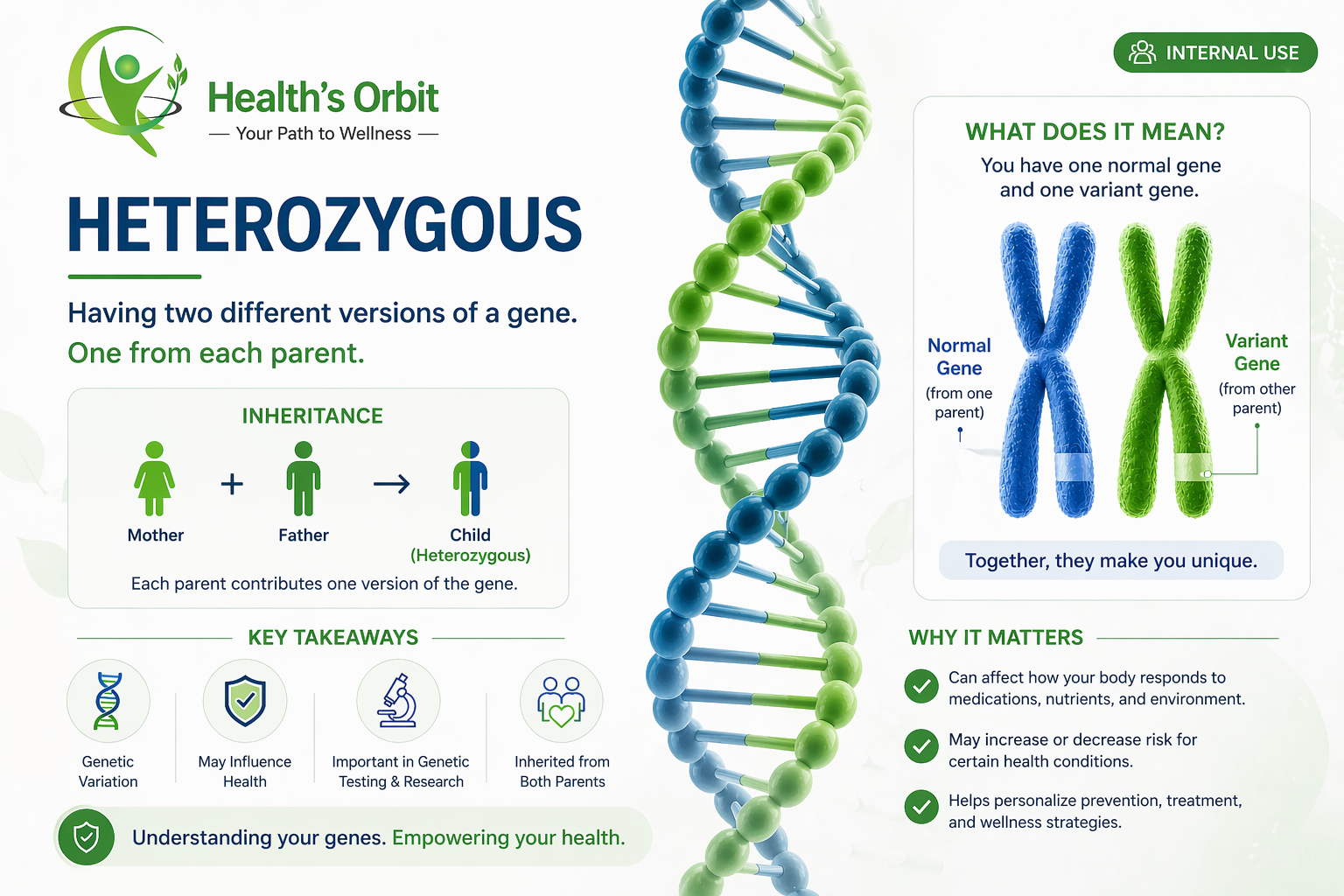
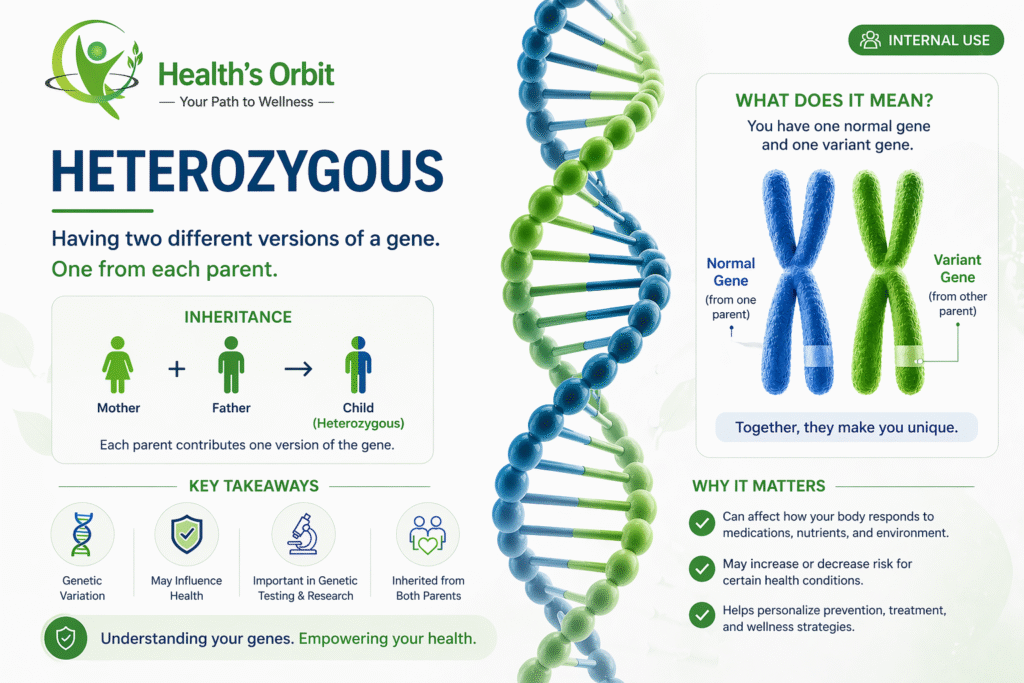
In genetics, every human inherits two copies of nearly every gene, one from each biological parent. These copies are called alleles. When those two alleles are different from each other, the individual is described as heterozygous for that particular gene.
For example, if one allele codes for brown eyes and the other codes for blue eyes, the person carries a heterozygous genotype at that eye-colour gene. The term comes from the Greek heteros and zygous (relating to a fertilised egg or zygote).
A heterozygous genotype is typically written as two different letters such as Aa where the capital letter represents the dominant allele and the lowercase represents the recessive one. This simple notation carries significant meaning for how traits are expressed across generations.
Heterozygous vs Homozygous: Key Differences Explained
To fully grasp what heterozygous means, it helps to contrast it with its counterpart: homozygous. A homozygous individual inherits two identical alleles for a gene either both dominant (AA) or both recessive (aa).
| Genotype | Allele Combination | Trait Expression |
| Heterozygous | Aa (one dominant, one recessive) | Dominant trait typically expressed |
| Homozygous dominant | AA (both dominant) | Dominant trait expressed |
| Homozygous recessive | aa (both recessive) | Recessive trait expressed |
The key distinction is variety. A heterozygous person carries genetic diversity at a given locus, while a homozygous person carries uniformity.
How dominant and recessive alleles interact?
When a person is heterozygous, the dominant allele usually determines what trait is physically expressed known as the phenotype. The recessive allele remains silent in terms of outward expression but is still present in the genetic code and can be passed on to future children.
This is the foundation of Gregor Mendel’s Law of Dominance, established through his famous pea plant experiments in the 19th century. A pea plant heterozygous for seed colour (Yy) would produce yellow seeds, because yellow (Y) is dominant over green (y) yet half its offspring could still inherit the green allele.
Visual example: Punnett squares for heterozygous parents
A Punnett square is a simple grid used to predict the genetic outcomes of a cross between two parents. When both parents are heterozygous (Aa × Aa), the possible offspring combinations are:
- AA: homozygous dominant (25%)
- Aa: heterozygous (50%)
- aa: homozygous recessive (25%)
This means statistically, one in four children from two heterozygous parents will express the recessive trait even though neither parent does. This is how traits can skip a generation.
Types of Heterozygous Conditions You Should Know
Heterozygosity is not a single, uniform state. There are several distinct forms, each with different biological and clinical significance.
Carrier state: what being a heterozygous carrier means
One of the most clinically relevant forms of heterozygosity is the carrier state. A heterozygous carrier inherits one functioning allele and one non-functioning or disease-associated allele for a recessive condition.
Because the dominant allele compensates, carriers typically show no symptoms. However, they can pass the affected allele to their children. Well-known examples include:
- Sickle cell trait: A person who is heterozygous for the sickle cell mutation carries one normal haemoglobin allele and one sickle allele. They do not develop sickle cell disease but may pass it on.
- Cystic fibrosis carrier: Someone heterozygous for a CFTR gene mutation generally has normal lung function but carries a 50% chance of passing the mutation to each child.
Carrier testing is now a routine part of reproductive health planning in many countries.
Compound heterozygous mutations and disease risk
A more complex scenario is compound heterozygosity, where an individual inherits two different mutant alleles at the same gene locus one from each parent. Unlike a simple carrier, this person may actually develop the associated condition because neither allele functions normally.
Compound heterozygous mutations are seen in conditions like phenylketonuria (PKU) and some forms of hereditary hearing loss. Genetic sequencing rather than simple carrier screening is often needed to identify this pattern, as standard tests may only check for the most common variants.
Real-World Examples of Heterozygous Traits
Genetics becomes far easier to understand with concrete examples. Heterozygous gene variants influence many traits we encounter in everyday life:
Eye color — Although eye color is polygenic (influenced by multiple genes), a simplified model illustrates the concept well. A person heterozygous at the OCA2 gene may carry one allele for brown and one for blue, typically expressing brown due to dominance.
ABO blood type — The gene determining ABO blood type has three alleles: A, B, and O. A person with one A allele and one O allele (AO genotype) is heterozygous and has blood type A, because A is dominant over O.
Sickle cell trait — As noted above, heterozygous carriers of the HbS allele have a mix of normal and sickle-shaped red blood cells. Interestingly, this heterozygous state appears to confer some protection against severe malaria, a classic example of heterozygote advantage in evolutionary biology.
BRCA1 gene variants — A person who inherits one mutated copy of the BRCA1 gene is heterozygous for that variant. Unlike purely recessive conditions, BRCA1 mutations are associated with significantly elevated lifetime risk for breast and ovarian cancers, even in the heterozygous state.
Heterozygous Mutations in Genetic Testing & Medicine
As direct-to-consumer DNA testing and clinical genetic panels become more accessible, understanding your heterozygous status has real practical value.
Genetic reports routinely flag variants as heterozygous or homozygous to indicate whether one or both copies of a gene carry a particular change. The clinical significance of being heterozygous depends heavily on the gene in question and the inheritance pattern of the associated condition.
For autosomal recessive diseases (like cystic fibrosis or Tay-Sachs), a single heterozygous mutation typically means carrier status meaningful for reproductive planning but not a direct health threat. For autosomal dominant conditions (like Huntington’s disease or familial hypercholesterolemia), a single heterozygous mutation is often sufficient to cause or significantly increase risk of the condition.
How to interpret a heterozygous result on a genetic report
If your genetic report states that you are heterozygous for a specific variant, here is how to approach the result:
- Identify the gene: Find out which gene contains the variant and what condition it is associated with.
- Check the inheritance pattern: Is the condition autosomal dominant, autosomal recessive, or X-linked? This changes everything.
- Assess variant classification: Variants are classified on a spectrum from “benign” to “pathogenic.” A heterozygous pathogenic variant carries more weight than a heterozygous variant of uncertain significance (VUS).
- Consult a genetic counsellor: Self-interpreting genetic data is difficult. A certified genetic counsellor can place your result in the context of your personal and family medical history.
- Consider cascade testing: If a clinically significant heterozygous variant is confirmed, first-degree relatives may benefit from targeted testing.
Summary
Heterozygous genetics sits at the intersection of everyday biology and modern medicine. Whether you are trying to understand a childhood biology lesson, decode a laboratory report, or navigate a conversation with your doctor about a family health history, knowing what heterozygous means gives you a concrete framework. Carrying two different alleles at a gene is the norm for much of the human genome and understanding that variation is the first step toward informed, confident decisions about your health.
Frequently Asked Questions
What does it mean to be heterozygous?
Being heterozygous means you have inherited two different alleles for a specific gene, one from each parent. The dominant allele typically determines the trait that is expressed, while the recessive allele may be passed on without being visible in your phenotype.
Is heterozygous good or bad?
Heterozygosity is neither inherently good nor bad. In some cases protective heterozygous carriers of the sickle cell allele have partial resistance to malaria. In other cases, a single heterozygous mutation can increase disease risk, particularly for dominant conditions.
What is the difference between heterozygous and homozygous?
A heterozygous individual carries two different alleles at a gene locus (Aa), while a homozygous individual carries two identical alleles either both dominant (AA) or both recessive (aa).
Can a heterozygous mutation cause disease?
Yes. For autosomal dominant conditions such as Huntington’s disease or BRCA1-related cancers, a single heterozygous mutation can directly cause disease or substantially raise lifetime risk. For recessive conditions, two affected alleles are usually required.
What does a heterozygous result on a DNA test mean?
It means one of your two copies of a particular gene carries the variant being tested. Depending on the gene, this may indicate carrier status, elevated disease risk, or no significant clinical concern. Professional interpretation is always recommended.