


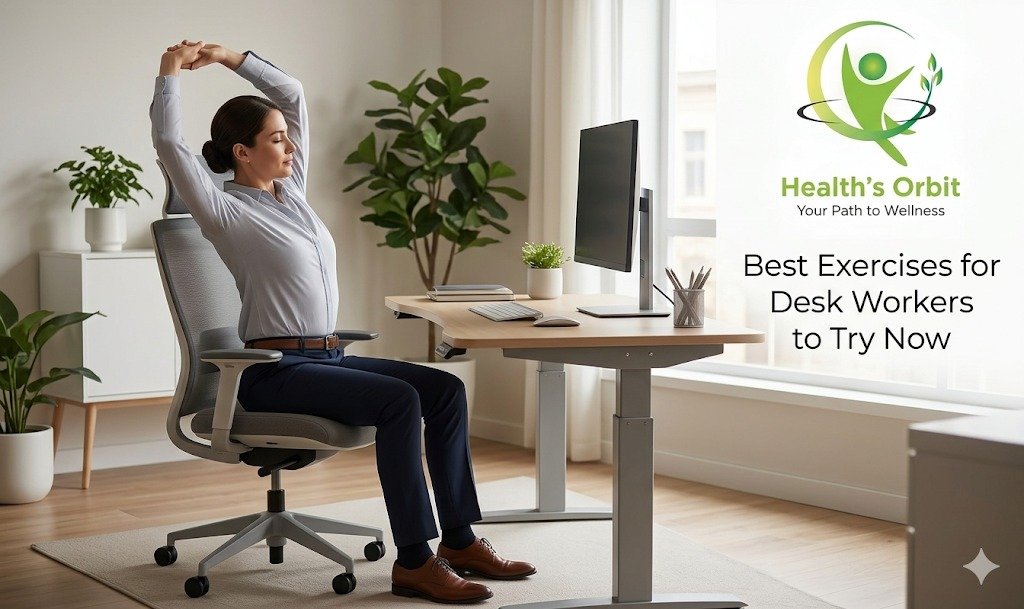
If you spend most of your day sitting at a desk, your body pays a price. Back pain, stiff neck, tight hips, and poor posture are just a few problems that desk workers face daily. The good news is that the best exercises for desk workers do not require a gym membership or hours of free time. With the right movements built into your daily routine, you can reduce pain, boost your energy levels, and protect your long term health.
This guide covers simple, proven exercises that desk workers can do at their workstation, during short breaks, or before and after work. Whether you are a beginner or already active, these moves will help you feel better fast.
Why Desk Workers Need Regular Exercise
Sitting for long periods slows blood circulation, weakens core muscles, and places excessive pressure on the spine. Studies show that prolonged sitting is linked to increased risks of heart disease, type 2 diabetes, and musculoskeletal disorders. Even people who exercise regularly after work can suffer the effects of sitting for 6 -9 hours a day.
The best exercises for desk workers target the muscles most affected by long hours of sitting, including the hip flexors, lower back, shoulders, and neck. Regular movement breaks also help improve focus, reduce stress, and increase overall productivity throughout the workday.
Best Exercises for Desk Workers You Can Do Right at Your Desk
You do not need to leave your workspace to get moving. These exercises can be done in your chair or standing beside it.
1. Seated Spinal Twist
Sit straight in your chair with your feet flat on the floor. Place your right hand on the back of your chair and your left hand on your right knee. Gently twist your torso to the right and hold for 20 to 30 seconds. Repeat on the other side. This movement relieves tension in the lower back and improves spinal mobility, making it one of the most effective exercises for desk workers who experience back stiffness.
2. Shoulder Blade Squeeze
Sit upright and pull both shoulder blades together as if you are trying to hold a pencil between them. Hold for five seconds, then release. Repeat 10 to 15 times. This exercise counteracts the forward shoulder rounding that comes from typing and using a mouse all day.
3. Neck Tilts and Rotations
Slowly tilt your head toward your right shoulder and hold for 15 seconds. Return to centre, then Slant to the left. Next, slowly rotate your head to look over each shoulder. These gentle stretches release tension in the neck and upper trapezius muscles that are constantly engaged when working at a screen.
4. Seated Leg Raises
While seated, straighten one leg and hold it up for five seconds. Lower it back down slowly without letting your foot touch the floor. Alternate legs and perform 10 to 12 repetitions per side. This exercise engages your core and improves circulation in the lower body.
5. Chair Dips
Place your hands on the edge of a sturdy chair, fingers pointing forward. Slide your hips off the seat and bend your elbows to lower your body a few inches. Push back up and Restate for 10 – 12 reps. Chair dips strengthen the triceps and activate the upper body without any equipment.
Standing and Break-Time Exercises for Desk Workers
Taking short movement breaks every 30 to 60 minutes is one of the most important habits a desk worker can build. These exercises are best done standing and take less than five minutes.
Standing Hip Flexor Stretch
Step your right foot forward into a small lunge position. Lower your left knee toward the ground and push your hips forward gently. Hold for 20 – 30 seconds and convert sides. Hip flexors become extremely tight from prolonged sitting, and this stretch is essential for desk workers who want to prevent lower back pain.
Calf Raises
Stand behind your chair and hold the back for balance. Rise up onto the balls of your feet, hold for two seconds, and slowly lower back down. Aim for 15 to 20 repetitions. Calf raises improve circulation and help prevent blood pooling in the legs, which is a common problem for desk workers.
Wall Push-Ups
Stand facing a wall and place your palms flat against it at shoulder height. Bend your elbows to bring your chest toward the wall, then push back. This modified push-up builds upper body strength and is easy to perform in any office environment without getting on the floor.
Desk Plank
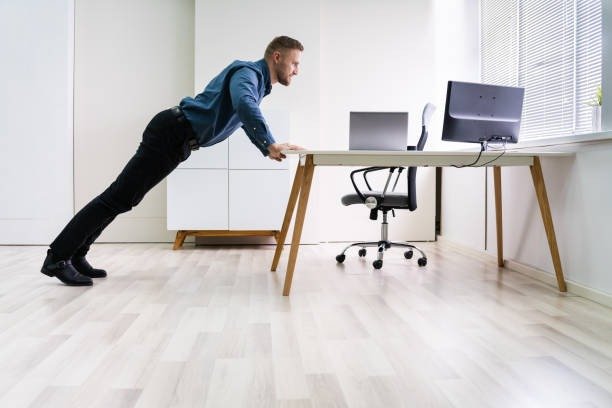
Place your forearms on the edge of your desk and walk your feet back until your body forms a straight line from head to heels. Pause this position for 20 – 30 seconds. The desk plank engages the core, back, and shoulders, and is a safe alternative to floor planks for desk workers who want to protect their joints.
Morning and Evening Routines for Desk Workers
Bookending your workday with short exercise routines amplifies the benefits of your desk-time movements. Here is a simple structure to follow:
•Morning (10 minutes):
Begin with five minutes of light walking or marching in place, followed by hip circles, arm swings, and a brief spinal warm-up. This prepares your body for a long period of seated work.
•Evening (15 minutes):
Focus on stretching and recovery. Cat-cow stretches, child’s pose, and a doorway chest stretch help undo the postural damage of the day. Adding a short walk of 10 to 15 minutes after work significantly improves cardiovascular health.
Tips to Stay Consistent With Exercise as a Desk Worker
Knowing the best exercises for desk workers is only half the battle. Staying consistent requires simple strategies.
- Set a timer on your phone or computer to remind you to move every 45 minutes.
- Use a standing desk if possible, alternating between sitting and standing throughout the day.
- Take phone calls standing up or walk slowly while on long calls.
- Park farther from the office entrance or take stairs instead of the lift.
- Keep a resistance band or small exercise ball at your desk for quick micro-workouts.
Small habits compound over time. Even five minutes of movement every hour adds up to 40 minutes of activity in an eight-hour workday.
Benefits of Regular Exercise for Desk Workers
Committing to the best exercises for desk workers delivers benefits well beyond physical health.
- Reduced chronic pain: Regular movement reduces lower back, neck, and shoulder pain caused by static postures.
- Improved posture: Strengthening the core and back muscles supports better spinal alignment throughout the day.
- Higher energy levels: Short movement breaks increase blood flow and oxygen delivery to the brain, fighting afternoon fatigue.
- Better mental health: Exercise releases endorphins that reduce anxiety and improve mood, which is especially important for those in high-stress roles.
- Lower risk of chronic disease: Regular activity counters the metabolic risks of prolonged sitting.
Conclusion
The best exercises for desk workers are simple, time-efficient, and remarkably effective when practised consistently. You do not need to overhaul your entire lifestyle to start feeling better. Begin with two or three exercises from this guide and build from there. Your spine, your energy levels, and your productivity will all thank you for it.
Frequently Asked Questions (FAQs)
Q1. How often should desk workers exercise during the day?
Aim to move for at least two to five minutes every 45 to 60 minutes throughout your workday.
Q2. Can desk exercises really replace going to the gym?
Desk exercises complement gym workouts but do not fully replace structured strength or cardio training.
Q3. What is the single best exercise for desk workers with back pain?
The seated spinal twist and standing hip flexor stretch are both highly effective for relieving desk-related back pain.
Q4. Do I need any equipment for desk worker exercises?
No equipment is needed; all exercises in this guide use only your body weight or your chair.
Q5. How long does it take to see results from desk exercises?
Most desk workers notice reduced stiffness and improved energy within one to two weeks of consistent practice.
.