

The best time to take creatine is after your workout, when muscles absorb nutrients more efficiently. However, consistency matters more than timing for long-term results.
Creatine Explained: How It Fuels Your Performance
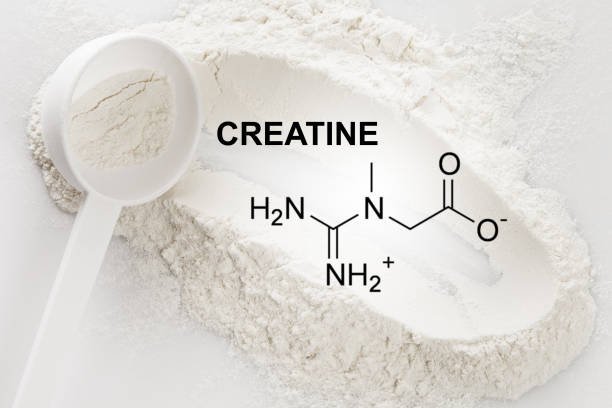
Creatine is one of the most researched supplements in sports nutrition history and for good reason. It occurs naturally in your body, primarily stored in skeletal muscle, and plays a direct role in producing adenosine triphosphate (ATP), the fuel your muscles burn during short, explosive efforts like heavy lifts, sprints and high-intensity intervals.
When you supplement with creatine, you raise your muscle’s phosphocreatine stores beyond what diet alone can achieve. That larger reservoir means more rapid ATP regeneration, which translates into real, measurable improvements: an extra rep at your working weight, a faster sprint time, less muscular fatigue between sets.
According to research published through the National Institutes of Health, creatine monohydrate consistently increases lean muscle mass, strength output, and exercise capacity across a wide range of populations, from trained athletes to older adults managing sarcopenia. The Mayo Clinic also recognizes creatine as generally safe and effective when used as directed.
Here is what most beginners miss: creatine does not work acutely, the way caffeine does. It works by saturating your muscle tissue over days and weeks. That saturation is what drives results, not a single perfectly timed dose. With that biological reality in mind, let’s look at where timing still plays a meaningful supporting role.
The Best Approach to Creatine Timing for Daily Saturation
Ask ten gym-goers this question and you will get ten different answers. Science, however, gives us a clearer picture.
A frequently cited 2013 study published in the Journal of the International Society of Sports Nutrition compared subjects who took creatine immediately before versus immediately after resistance training. The post-workout group showed slightly greater gains in lean mass and strength over a four-week period, though the difference was modest. The researchers concluded that proximity to training before or after likely outperforms taking it at an unrelated time like mid-morning or before bed.
So when is the best time to take creatine in practical terms? Think of it this way:
- On training days → Take it within 30 minutes before or after your workout. Post-workout has a slight edge based on current evidence.
- On rest days → Take it at any consistent time. Morning with breakfast or afternoon with a meal both work well.
- During loading → Spread doses throughout the day with meals to improve absorption and reduce any GI discomfort.
The single most important variable is not the clock, it is whether you take it daily without skipping. Muscle creatine stores deplete gradually, and inconsistent supplementation undermines the saturation effect that drives results.
Creatine Before vs After Workout: Which Is Better?
This is the debate that fills fitness forums every day. Here is a clear breakdown based on what the research actually shows.
The case for pre-workout creatine: Some athletes prefer taking creatine before training because they believe it primes the muscles for performance. In theory, a small top-up before a session could contribute marginally to phosphocreatine availability. In practice, if your stores are already saturated from consistent daily dosing, the timing of that single pre-workout dose has minimal additional impact.
The case for post-workout creatine: After training, your muscles are in a heightened state of nutrient sensitivity. Blood flow to muscle tissue is elevated, insulin signaling is more active and the uptake of substrates including creatine may be more efficient. This post-exercise anabolic window, while not as dramatic as once believed, does offer a physiological advantage for supplement absorption.
The verdict: Post-workout has a slight, evidence-supported edge. But if taking creatine after training is logistically inconvenient perhaps you train fasted or immediately before commuting pre-workout is a completely valid alternative. Consistency beats perfect timing every time.
Creatine Timing Comparison Table
| Timing | Performance Impact | Absorption Efficiency | Convenience |
| Pre-Workout | Moderate | Good | High |
| Post-Workout | Slightly Higher | Best | Moderate |
| With a Meal (any time) | Moderate | Good (insulin spike helps) | High |
| Before Bed | Low | Fair | High |
| Split Doses (loading) | High (saturation phase) | Best | Low |
Should You Take Creatine on Rest Days?
Yes,and this point matters more than most people realize.
Rest days are not recovery days for your creatine stores; they are maintenance days. If you only supplement on training days, you create fluctuations in muscle creatine concentration that can slow the saturation process and dilute the benefits you are working toward.
Think of creatine like filling a tank. On training days, you use some of that stored fuel. On rest days, you refill it. Skip the refill and you never quite reach the full capacity that makes the supplement worthwhile.
On rest days, take your standard daily dose (3–5g) at any convenient time. Pairing it with a carbohydrate-containing meal is a practical strategy because the resulting insulin response can enhance creatine transport into muscle cells. A glass of fruit juice, a bowl of oatmeal or a banana alongside your creatine capsule or powder all serve this purpose well.
From a coaching standpoint, I tell clients to link their rest-day creatine dose to something they already do every morning: coffee, breakfast, a morning supplement stack. Habit-stacking eliminates the “I forgot” problem entirely.
How to Take Creatine Correctly
Getting the dosing right removes one of the most common sources of confusion for beginners.
Loading Phase (Optional but Faster): Take 20g per day, split into four 5g doses with meals, for 5–7 days. This saturates muscle creatine stores rapidly. You will feel the performance benefits sooner, but GI discomfort (bloating, cramping) is more likely during this phase.
Maintenance Phase (Standard Approach): Take 3–5g per day continuously. Without a loading phase, full saturation takes approximately 3–4 weeks but produces the same end result with virtually no side effects.
Gradual Start (Best for Sensitive Individuals): Begin at 2–3g per day for the first two weeks, then increase to 5g. This approach minimizes digestive issues for those with sensitive stomachs.
Hydration: Creatine draws water into muscle cells. Increase your daily water intake by at least 500ml to avoid dehydration symptoms and support the cellular volumization that contributes to muscle fullness.
Form: Creatine monohydrate remains the gold standard. Creatine HCl, buffered creatine and ethyl ester variations are marketed aggressively but have not consistently outperformed monohydrate in head-to-head research. Save your money and buy monohydrate.
Creatine Dosage Guide
| Goal | Daily Dose | Phase | Best Taken With |
|---|---|---|---|
| General Performance | 3–5g | Maintenance | Water or juice |
| Rapid Saturation | 20g (split 4x) | Loading (5–7 days) | Meals |
| Muscle Gain | 5g | Maintenance | Post-workout shake |
| Older Adults (50+) | 3–5g | Maintenance | Breakfast meal |
| Sensitive Stomach | 2–3g | Gradual | Food |
Benefits of Creatine Timing for Muscle Growth
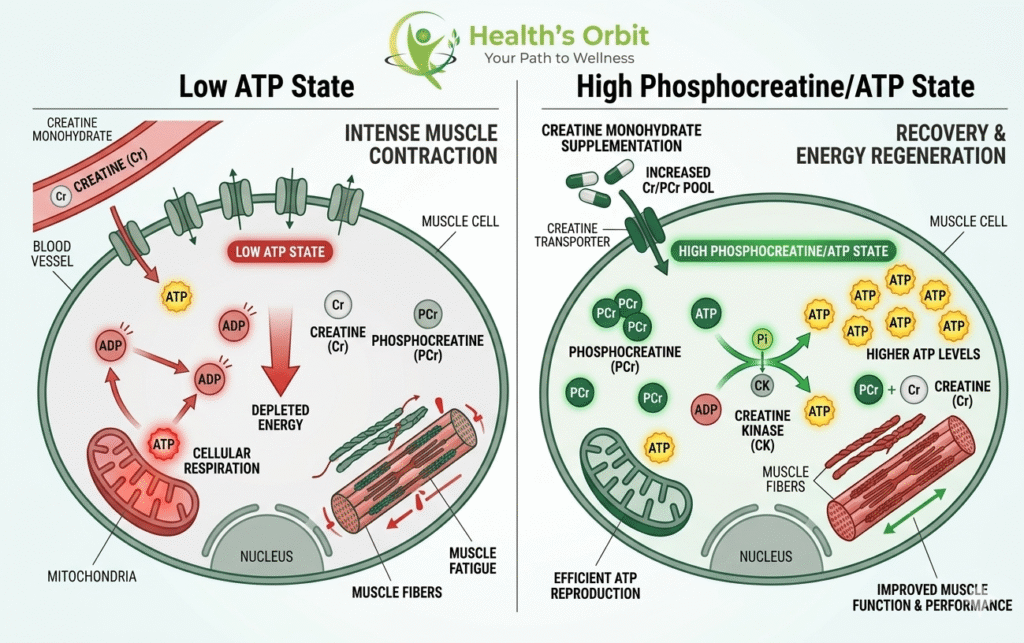
Figure 3: How creatine regenerates ATP in muscle cells during high-intensity exercise, the science behind the energy boost.
Understanding creatine timing for muscle gain goes beyond just the supplement itself. When paired with resistance training and adequate protein intake, strategic creatine use amplifies several adaptive mechanisms.
Increased training volume: Higher phosphocreatine reserves allow more total reps and sets per session. Over weeks of training, that additional volume accumulates into greater hypertrophic stimulus.
Enhanced muscle protein synthesis: Post-workout creatine, especially when taken alongside protein and carbohydrates, may support the anabolic environment needed for muscle repair and growth.
Reduced muscle damage markers: Research indicates creatine supplementation can lower markers of exercise-induced muscle damage, meaning faster recovery between sessions and less soreness limiting your next workout.
Improved satellite cell activity: Emerging research suggests creatine may enhance the activity of satellite cells, the muscle stem cells responsible for muscle fiber repair and growth when used consistently over longer training cycles.
For best results, align your creatine protocol with a structured progressive overload program and a high-protein diet providing at least 1.6g of protein per kilogram of bodyweight daily.
Common Mistakes to Avoid
Even a well-intentioned creatine protocol can fall flat when these errors are present.
Inconsistent dosing is the most damaging mistake. Missing multiple days per week prevents full muscle saturation and makes it nearly impossible to assess whether the supplement is working.
Not drinking enough water is a close second. Dehydration during creatine use can cause headaches, cramping and sluggish performance symptoms that are often blamed on the creatine itself when they are actually a hydration failure.
Cycling creatine unnecessarily taking it for eight weeks, stopping for four, then restarting has no scientific basis. Unlike some other supplements, creatine does not down-regulate natural production meaningfully, and cycling only interrupts your stores.
Choosing inferior forms based on marketing. Creatine HCl and other variants cost significantly more without proven superiority. Stick to pharmaceutical-grade creatine monohydrate.
Ignoring diet quality while focusing on timing. Creatine is a performance amplifier, it does not replace adequate sleep, caloric intake or structured muscle gain workouts.
Is Creatine Safe According to Science?
When is the best time to take creatine? This is a question we hear consistently and the answer is far more flexible than most people realize.Creatine monohydrate is among the most extensively studied ergogenic aids in existence, with decades of clinical research and a strong safety profile.
The National Institutes of Health notes that creatine supplementation at recommended doses does not adversely affect kidney function in healthy individuals. The concern about kidney stress stems from a misunderstanding: creatine metabolism increases creatinine in the blood, which can skew kidney markers in lab tests, but this is not indicative of kidney damage.
The Mayo Clinic supports short- and long-term use at standard doses as safe for most adults. Individuals with pre-existing kidney conditions should consult a physician before supplementing, as should pregnant or breastfeeding individuals, given the limited research in those populations.
Reported side effects at standard doses (3–5g/day) are minimal. Bloating and water retention are the most commonly noted, particularly during loading, and typically resolve within the first week of maintenance dosing.
Conclusion
Determining when is the best time to take creatine ultimately comes down to this: after your workout on training days, with a meal on rest days, and every single day without exception. Post-workout timing carries a small, evidence-backed advantage in absorption and anabolic synergy, but it is your daily consistency, adequate hydration, and alignment with a quality training program that will produce the muscle and performance gains you are after.
Creatine is not magic but when used correctly and consistently, it is one of the few supplements that genuinely delivers on its promise. Start with 3–5g of creatine monohydrate daily, stay hydrated, train with purpose, eat enough protein, and give it four weeks. The results will speak clearly.
Frequently Asked Questions
Q1: When is the best time to take creatine for beginners?
Post-workout is ideal for beginners. Take 3–5g with water or a protein shake within 30 minutes after training. On rest days, take it with breakfast.
Q2: Can I take creatine on an empty stomach?
Yes, but pairing it with a carbohydrate source improves uptake. If stomach sensitivity is a concern, always take it with food.
Q3: How long does creatine take to work?
With a loading phase, noticeable performance improvements appear within 5–7 days. Without loading, expect 3–4 weeks for full saturation and noticeable effects.
Q4: Should I take creatine before or after workout for weight loss?
Creatine does not directly cause fat loss, but improved training performance and lean mass retention support body recomposition. Post-workout remains the preferred timing.
Q5: Does creatine timing matter more than dose?
No. Consistent daily dosing at the correct amount (3–5g) matters far more than the precise time of day. Timing provides a marginal advantage once your baseline habits are solid.
Q6: Can I mix creatine with protein powder?
Absolutely. Combining creatine with a post-workout protein shake is one of the most practical and effective delivery methods. The protein and insulin response from whey may further enhance creatine uptake.
Q7: Is creatine safe for teenagers?
Research in adolescents is limited. Most sports nutrition organizations recommend waiting until adulthood. Teenagers should consult a physician and focus on optimizing training and diet first.