

Why I Started Looking for Ways to Dissolve a Cyst Naturally
I still remember the exact moment I found it, a firm, painless bump sitting quietly behind my right ear. It was a Tuesday morning. I had just washed my face and noticed a small raised lump that hadn’t been there the week before. My first instinct was panic. I immediately started Googling, and within minutes I was drowning in conflicting advice: pop it, don’t pop it, use castor oil, use tea tree oil, go to a doctor, don’t waste money on a doctor. It was overwhelming.
After a visit to my GP, I learned it was a sebaceous cyst, a benign, non-cancerous sac filled with keratin-rich material that had formed just beneath my skin due to a blocked hair follicle. My doctor said it was harmless and suggested a watch and wait approach. But it kept nagging at me mentally and physically. That’s when I committed to researching how to dissolve a cyst naturally, not just mask the discomfort, but actually help my body work through it.
Over the next four months, I tested remedies one by one, kept notes, and tracked what changed. This article is the guide I desperately needed but couldn’t find back then. Whether you’re dealing with a sebaceous cyst, an epidermoid cyst, or a stubborn pilar cyst on your scalp, I want to walk you through what I tried, what the research says, and most importantly what helped.
⚠ Golden Rule: Never try to pop, squeeze, or cut open a cyst at home. Squeezing pushes bacteria deeper into the tissue, dramatically raises infection risk, and can cause the cyst to return larger than before.
What Is a Cyst and Why Does It Form on Your Skin?
Before I could treat my cyst intelligently, I had to understand exactly what I was dealing with. A cyst is a closed, sac-like pocket of tissue that can fill with fluid, pus, dead skin cells, or other material. They are not cancerous on their own but they do need to be professionally diagnosed to rule out anything more serious. Cysts can appear almost anywhere on the body, your face, neck, back, scalp, wrists, ovaries, and even internal organs.
For most people searching for how to dissolve a cyst naturally, they’re dealing with one of the superficial skin based types. These form when a hair follicle or sebaceous gland gets blocked, trapping secretions beneath the surface. Factors that make you more prone include hormonal imbalances, genetic predisposition, a history of acne, or minor skin injuries like cuts and piercings.
Common Types of Skin Cysts
| Type | Location | Primary Cause | Respond to Natural Remedies? |
| Epidermoid (Sebaceous) Cyst | Face, neck, back, chest | Blocked hair follicle / dead skin cells | Sometimes best candidate |
| Pilar Cyst | Scalp (90% of cases) | Keratin buildup around hair root | Occasionally with warm compress |
| Ganglion Cyst | Wrists, hands, feet | Joint/tendon fluid leakage | Rarely usually needs aspiration |
| Ovarian Cyst | Ovaries | Hormonal changes, PCOS | Symptom relief only needs monitoring |
| Bartholin Cyst | Vaginal area | Blocked Bartholin gland duct | Medical care almost always needed |
Note: Natural remedies work best on small, non-infected, superficial skin cysts particularly epidermoid and sebaceous types. Internal cysts (ovarian, kidney, liver) require a doctor’s evaluation. Never self-treat a cyst you haven’t had properly diagnosed.
How to Dissolve a Cyst Naturally: 7 Remedies I Personally Tested
After my diagnosis, I began a structured trial of natural approaches over approximately four months. I kept a simple daily log of what I applied, how often, and how my cyst looked and felt each week. Here’s what I discovered, ranked from most to least effective based on my personal results and what the research supports.
1. Warm Compress
The most effective and safest method I found. Increases circulation, softens the cyst wall, and encourages natural drainage without breaking the skin.
2. Tea Tree Oil
Documented antimicrobial and anti-inflammatory properties. Must always be diluted. I saw visible reduction in surrounding redness within 10–14 days.
3. Castor Oil Pack
Applied warm over the cyst. May enhance lymphatic flow and reduce local inflammation. Deeply soothing and worth combining with heat therapy.
4. Aloe Vera Gel
Antiseptic and anti-inflammatory. I used it as a calming layer after warm compress sessions. Great for reducing surface irritation and redness.
5. Apple Cider Vinegar (Diluted)
Mixed evidence. The acidity may help with surface bacteria. Must be diluted 50/50 with water — undiluted Apple cider vinegar (ACV) burned my skin. Limited effectiveness on the cyst itself.
6. Turmeric (Internal + Topical)
Curcumin is a well-researched anti-inflammatory. I took 500mg daily as a supplement and applied a turmeric-water paste topically. Reduced visible swelling over three weeks.
7. Witch Hazel
Applied with a cotton ball 3-4 times daily. Kept the area clean, reduced surface inflammation, and worked well in combination with tea tree oil.
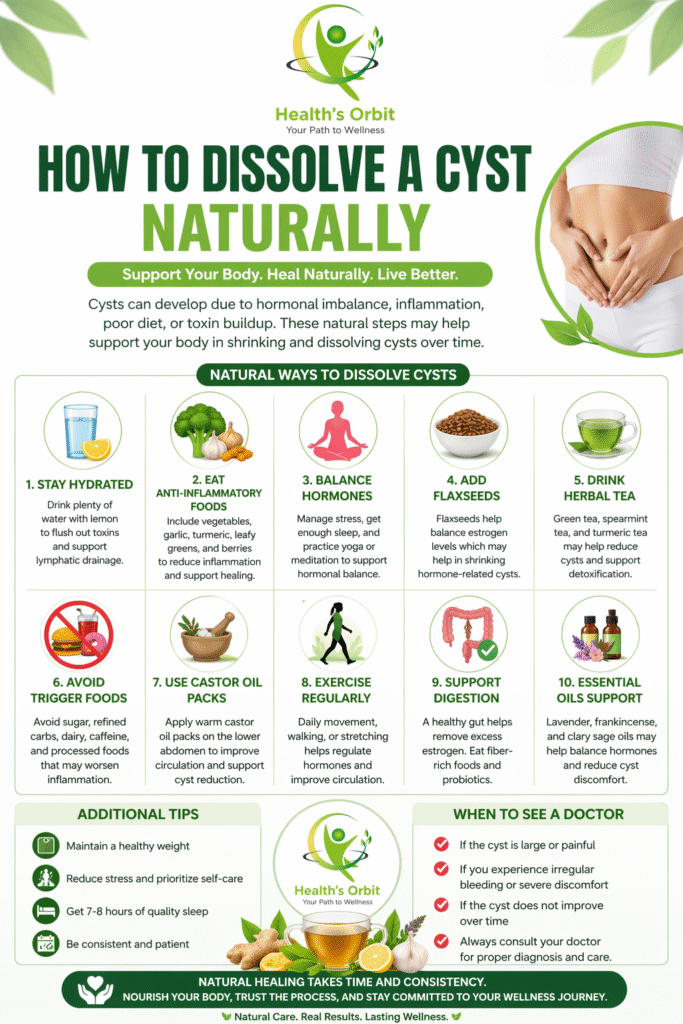
Step-by-Step: My Warm Compress Routine
The warm compress became my non-negotiable twice-daily habit. The UK’s National Health Service (NHS) specifically recommends warm compresses for certain eyelid cysts, and the principle applies well to superficial skin cysts throughout the body. Here’s the exact routine I followed:
- Soak a clean washcloth in comfortably warm, not boiling water. It should feel pleasant, not painful, on the back of your hand.
- Wring out the excess so the cloth is moist but not dripping.
- Place it gently over the cyst. Apply only light, comfortable pressure, do not press hard.
- Hold in place for 10-15 minutes. I used this time to read or rest.
- Repeat 3-4 times per day. Always use a fresh, clean cloth each session to avoid introducing bacteria.
- Afterward, gently pat the area dry and apply a thin layer of pure aloe vera gel.
Enhanced Version , Castor Oil Pack: For deeper relief, I soaked my cloth in warm castor oil instead of plain water, placed it over the cyst, covered with a small piece of plastic wrap, and rested for 20–30 minutes. The ricinoleic acid in castor oil has well-documented anti-inflammatory properties and may support lymphatic drainage around the cyst.
How to Use Tea Tree Oil Safely on a Cyst
Tea tree oil is one of the more researched natural remedies for skin based cysts. Studies confirm its antimicrobial and anti-inflammatory activity, particularly against Staphylococcus aureus, a common bacteria involved in infected sebaceous cysts. However, it must always be diluted before skin application. Here is the method I used safely for over two months:
- Measure 2–3 drops of 100% pure tea tree oil into 1 tablespoon of carrier oil coconut or jojoba both work well.
- Before applying to the cyst, do a 24-hour patch test on your inner forearm to rule out any skin sensitivity.
- Apply the diluted mixture directly to the cyst using a clean cotton ball. Do not rub dab gently.
- Cover loosely with a small sterile bandage if the cyst is in an area prone to friction or clothing contact.
- Repeat twice daily once in the morning and once at night consistently for at least 3–4 weeks before evaluating results.
Natural Remedies vs. Medical Treatment: Side-by-Side Comparison
One of the most important things I learned throughout this process is that natural remedies and professional medical treatment are not in competition; they serve different purposes. Natural approaches work best for reducing discomfort and possibly shrinking small, stable, non-infected cysts. Medical treatment is the only guaranteed way to fully and permanently remove a cyst. Here’s the honest comparison that helped me decide when to stay home and when to book an appointment:
| Factor | Natural Home Remedies | Medical Removal (Doctor) |
| Effectiveness | Partial — may reduce size and relieve symptoms | Complete — permanently removes the cyst |
| Cost | Low (usually under $20 total) | Moderate to high (varies by country/insurance) |
| Time to Results | Weeks to months of daily consistency | Single visit of 15–30 minutes |
| Risk of Scarring | Very low if performed correctly | Minimal with excision; slightly higher with drainage |
| Risk of Infection | Low with clean technique | Very low (sterile clinical environment) |
| Recurrence Risk | High — cyst wall typically remains intact | Low — wall is surgically excised |
| Best Used For | Small, non-infected, stable, diagnosed cysts | Infected, painful, large, or rapidly growing cysts |
| Pain During Treatment | None | Minimal — local anesthesia is used |
| Emotional Effort | High — requires patience and discipline | Low — resolved in one appointment |
What Most Articles Miss: Diet, Gut Health, and Cyst Prevention
This was the most surprising discovery of my entire research journey and it’s something virtually none of the top-ranking articles on how to dissolve a cyst naturally talk about. Cysts don’t form in isolation. They are often a surface expression of internal imbalances: inflammation, hormonal fluctuation, and even gut microbiome disruption can all create the conditions that make your skin more prone to cyst formation and slower to heal existing ones.
Anti-Inflammatory Eating: What I Changed in My Diet,
Chronic systemic inflammation is widely recognized by dermatologists as a key driver of recurring skin cysts. When I started approaching my cyst as a symptom of inflammation rather than just a cosmetic problem, my strategy shifted significantly. I made the following dietary changes and stuck to them for at least eight weeks before evaluating their impact.
Significantly increased my omega-3 fatty acid intake adding salmon three times per week, a tablespoon of ground flaxseed in my morning oatmeal, and a small handful of walnuts daily. I added more cruciferous vegetables like broccoli, cauliflower, and Brussels sprouts, which support liver detoxification and hormone clearance. Then reduced ultra-processed foods, white sugar, and refined carbohydrates almost entirely. These foods trigger insulin spikes that worsen skin inflammation. I added a daily 500mg curcumin (turmeric extract) supplement, which has robust research supporting its anti-inflammatory effects in the body. Within six to eight weeks, my cyst looked less angry, and new small bumps that had been appearing on my neck stopped forming altogether.
- Omega-3 Fatty Acids
- Cruciferous Vegetables
- Turmeric / Curcumin
Avoid These: White sugar, refined carbs, vegetable seed oils, alcohol. All promote systemic inflammation and can worsen cyst-prone skin.
The Gut-Skin Connection: Why Probiotics May Help,
One of the more cutting-edge areas I explored was the growing body of research on the gut-skin axis, the idea that the health of your intestinal microbiome directly influences the condition of your skin. When gut bacteria are imbalanced (a condition called dysbiosis), the resulting intestinal permeability or “leaky gut” allows inflammatory compounds to enter the bloodstream and trigger skin reactions. This includes conditions like acne, rosacea, eczema, and increasingly, recurring skin cysts.
I began taking a daily multi-strain probiotic supplement containing at least 10 billion CFUs, with strains including Lactobacillus acidophilus and Bifidobacterium longum both of which have specific evidence for reducing skin inflammation. Within about six weeks, I noticed my digestion improved significantly, and over three months, the overall texture and oil balance of my skin shifted noticeably. I cannot claim the probiotic dissolved my cyst but it appeared to create a less inflammatory skin environment that made other remedies more effective. I also added fermented foods: a small portion of plain kefir in the morning and a tablespoon of raw sauerkraut for dinner. These provide live cultures without the cost of supplements.
Probiotic Starter Guide for Skin Health
Look for supplements with these features: 10–30 billion CFUs per dose, multiple strains including L. acidophilus and B. longum, a dark glass or opaque capsule bottle (light degrades live cultures), and third-party testing certification. Store in a cool, dry place not in a hot bathroom cabinet. Give it a minimum of 6–8 weeks before evaluating any impact on your skin.
Stress, Cortisol, and the Hormonal Root of Recurring Cysts
This section changed everything for me. When I first read that stress could contribute to cyst formation, I dismissed it as vague wellness advice. But the mechanism is actually very specific and well-documented. Chronic psychological stress causes the adrenal glands to produce elevated levels of cortisol, your body’s primary stress hormone. Elevated cortisol does two damaging things: it increases sebum (skin oil) production by stimulating androgen receptors in sebaceous glands, and it suppresses the immune system’s ability to clear cellular debris and control local inflammation. Both of these effects directly worsen the conditions that lead to blocked glands and cyst formation.
Note: Natural approaches to cyst management work best as a system not as isolated tricks. Warm compresses treat the cyst directly. Anti-inflammatory diet and probiotics improve the internal environment. Stress reduction prevents new cysts from forming. Use all three layers together for the best results when trying to dissolve a cyst naturally.
When Natural Remedies Are Not Enough: Warning Signs to Watch
Natural remedies have genuine limits, and recognizing those limits early is what prevents a manageable cyst from becoming a dangerous abscess. I kept this checklist on my phone and reviewed it weekly during my treatment period.
| Warning Sign | What It Could Mean | Action Required |
| Sudden rapid growth | Infection, inflammation, or underlying condition | See a doctor promptly |
| Intense redness and heat radiating outward | Active bacterial infection | Medical treatment needed — may require antibiotics |
| Pus, discharge, or foul smell | Abscess formation | Urgent medical care — do not squeeze |
| Fever accompanying the cyst | Systemic infection (cellulitis) | Go to urgent care or emergency room |
| No improvement after 4–6 weeks | Home remedies are insufficient for this cyst | Consult a dermatologist |
| Cyst on face, genitals, or near a joint | Sensitive location needing precision care | Professional assessment recommended |
| Cyst returns after prior treatment | Cyst wall was not fully cleared | Surgical excision by a specialist |
| Hard, irregular edges or attached to deeper tissue | Rule out lipoma or, rarely, malignancy | Biopsy or imaging — see a doctor urgently |
Remember: The only fully reliable and permanent method of removing a cyst is surgical excision by a qualified physician. Natural remedies may reduce symptoms and occasionally help shrink a cyst, but they almost never eliminate the cyst wall which means the cyst can return.
My Final Takeaway
If there is one thing my four-month journey taught me about how to dissolve a cyst naturally, it’s that this process demands patience above everything else. There are no shortcuts. The remedies that worked for me were the daily warm compress routine, the diluted tea tree oil, the castor oil packs, the dietary overhaul, the sleep and stress improvements. None of them worked in isolation, and none of them worked overnight. They worked because I committed to them together, consistently, for months.
Your Complete 4-Week Natural Cyst Protocol at a Glance:
Daily (Morning): Warm compress 10–15 min → Pat dry → Apply diluted tea tree oil with cotton ball → Take 500mg curcumin supplement + probiotic with breakfast.
Daily (Evening): Warm compress 10–15 min → Castor oil pack 20 min (3x/week) → Apply aloe vera gel → 5-min 4-7-8 breathing before sleep.
Weekly: Photograph the cyst in consistent lighting to track changes. After 6 weeks of no improvement, book a dermatologist appointment.
Frequently Asked Questions
Q1. Can you dissolve a cyst naturally without seeing a doctor?
You can reduce the size and discomfort of a small, non-infected skin cyst using natural remedies like warm compresses, diluted tea tree oil, and castor oil packs. However, complete natural dissolution is uncommon; the cyst wall typically remains intact and can refill unless surgically removed. Always have a cyst properly diagnosed before beginning home treatment.
Q2. How long does it take for a cyst to dissolve naturally?
Most people need 4-8 weeks of consistent daily natural treatment to see a noticeable reduction in cyst size. Some small ovarian cysts resolve on their own within 1-3 menstrual cycles with no treatment at all. If there is no change after 6 weeks of careful home care, consult a dermatologist.
Q3. What is the fastest natural way to get rid of a cyst?
A warm compress applied 3-4 times daily for 10-15 minutes per session is the fastest-acting natural method. It increases local blood flow, softens the cyst wall, and encourages the cyst to drain on its own. Combining this with a twice daily diluted tea tree oil application produces better results than either method alone.
Q4. Does apple cider vinegar really dissolve cysts?
No scientific evidence supports the claim that apple cider vinegar dissolves cysts. Its mild acidity may reduce surface bacteria, but it cannot penetrate deep enough to affect the cyst wall or its contents. Applied undiluted, it will irritate or chemically burn the skin. Always dilute 50/50 with water and discontinue use if any irritation occurs.